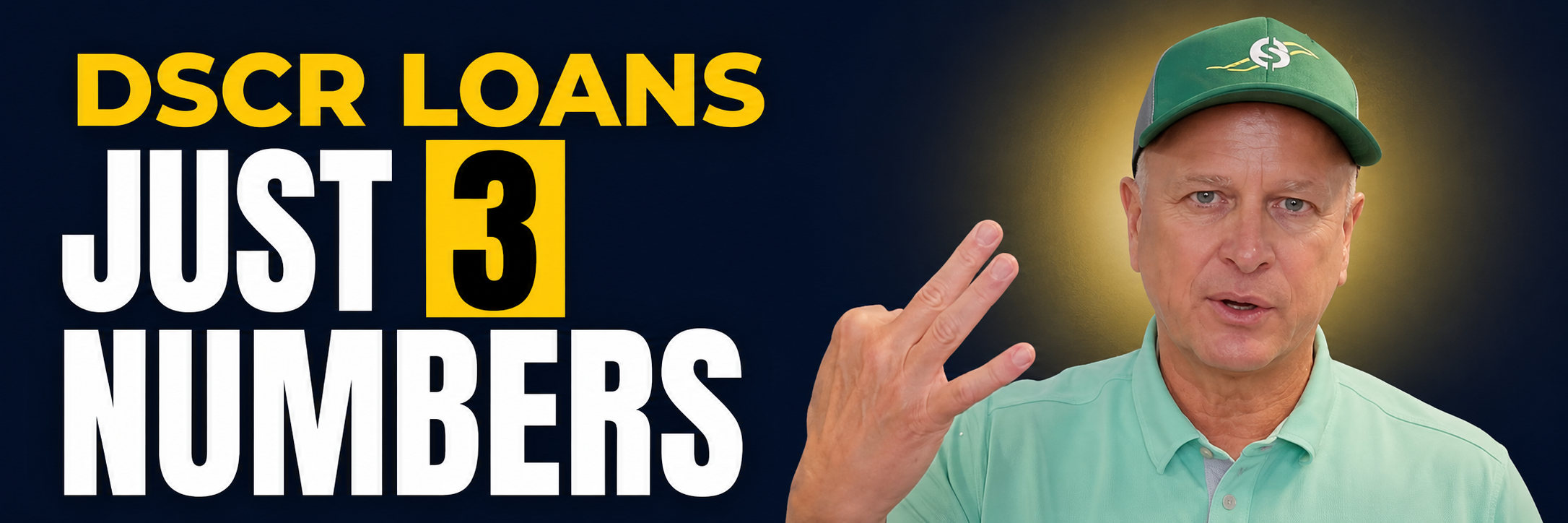
Real estate investors hear a lot of big words when people talk about loans. However, the truth is this: DSCR loans are much easier than most people think. In fact, once you understand a few simple numbers, you can quickly tell if a rental property may qualify. That is why understanding DSCR Loans 2026: 3 Easy Numbers You Need to Understand matters so much. Instead of getting lost in spreadsheets and complicated formulas, you can focus on three easy things that help you make smarter investing decisions. Better yet, DSCR loans are built for real estate investors. So, they focus more on the property and less on your personal income. Because of that, many investors use them to grow rental portfolios faster.
What Is a DSCR Loan?
A DSCR loan is a loan for rental property investors. DSCR stands for “Debt Service Coverage Ratio.” Although the name sounds technical, the idea is simple. The lender wants to know one thing: Does the property make enough rent to cover the main expenses? That is really the heart of the loan. Therefore, DSCR loans are often called “no personal income loans” because lenders mainly focus on the property income instead of your W-2 income or tax returns. For example, someone with good credit and a strong rental property may qualify even if they are self-employed, retired, or write off a lot of income on taxes.
Number #1: Do the Rents Cover the Expenses?
This is the biggest number in a DSCR loan. The lender compares the market rent to five simple expenses. If the rent is greater than the expenses, the property may qualify.
The 5 Expenses You Need to Know
1. Principal and Interest Payment
First, you need the mortgage payment for the new loan.
This is just the:
- Principal
- Interest
Nothing more.
2. Property Taxes
Next, lenders look at current property taxes. Since taxes keep changing in many areas, you need updated numbers.
3. Property Insurance
After that, lenders check the monthly insurance cost for the property.
4. HOA Fees
If the property has an HOA, those monthly dues count too.
5. Flood Insurance
Finally, if the property sits in a flood zone, flood insurance must be included.
What DSCR Loans Usually Do NOT Count
This surprises many new investors.
Most DSCR loans do not count:
- Utilities
- Maintenance
- Vacancy rates
- Property management
- Repair reserves
Those things still matter for your profits. However, they usually are not part of basic DSCR underwriting.
Simple DSCR Example
Let’s say a rental property brings in:
- $1,500 monthly rent
Now let’s say the five expenses total:
- $1,450 per month
Since the rent is greater than the expenses, the property may qualify income-wise. That is why DSCR loans are often simpler than bank loans.
Number #2: Your Credit Score
Next, let’s talk about credit scores.
Your credit score affects:
- Interest rates
- Loan options
- Monthly cash flow
Therefore, better credit usually means better loan terms.
Easy Credit Score Zones
Here is a simple guide:
| Credit Score | What It Usually Means |
|---|---|
| 660+ | You are in the game |
| 700–750+ | Better rates and more options |
| 750+ | Strong pricing and smoother approvals |
Higher credit scores often lead to:
- Lower interest rates
- Lower monthly payments
- Better cash flow
- Easier underwriting
Example of Why Credit Matters
Here is a real-world example. One investor received a DSCR rate around 6.25%. Another investor looking at a similar loan received a rate closer to 7%.
On a $300,000 loan, that difference was roughly:
- $170 to $175 more per month
That is money leaving your pocket every single month. Therefore, protecting your credit matters a lot in real estate investing.
Good News for Partnerships
Here is another helpful tip. Sometimes lenders can use the stronger credit score from a business partner or spouse tied to the property.
For example:
- Investor A has a 680 score
- Investor B has a 780 score
Using the higher score may help the deal get:
- Better pricing
- Better cash flow
- Better loan terms
Number #3: Loan-to-Value (LTV)
The third number is loan-to-value, also called LTV. This simply means:
How much the lender will loan compared to the property value.
Easy LTV Example
Let’s say:
- Property value = $200,000
- Lender allows 75% LTV
That means:
- Maximum loan = $150,000
Simple.
Common DSCR Loan Limits in 2026
Most investors should expect:
Purchases
- Usually up to 80% LTV
Refinances
- Usually up to 75% LTV
Although some lenders may go higher, the rates often increase too. Because of that, many investors stay within those safer ranges.
Why DSCR Loans Are So Popular in 2026
DSCR loans continue growing because they help investors move faster.
For example:
- New investors can qualify easier
- Self-employed borrowers can qualify easier
- Investors with tax write-offs may still qualify
- Retirees may still qualify
Most importantly, the property income matters more than personal income. That is a huge reason investors love DSCR loans.
Before You Buy a Rental Property
Before you put a property under contract:
- Check market rents
- Verify taxes
- Verify insurance
- Check for HOA fees
- Check for flood insurance
Then, run the numbers first. Do not guess. Even two homes on the same street may qualify differently because taxes, insurance, and rents can change from property to property.
Final Thoughts on DSCR Loans 2026
DSCR loans do not need to feel confusing.
In fact, when you break them down, there are really only three easy numbers to focus on:
- Do the rents cover the expenses?
- What is your credit score?
- What is the loan-to-value?
Once you understand those three numbers, you can shop for rental properties with more confidence. Better yet, you can avoid wasting time on deals that may not qualify. Therefore, before you talk to a lender or place an offer, run the numbers first. A few minutes today may save you thousands later.
Watch my most recent video to find out more about: DSCR Loans 2026: 3 Easy Numbers You Need to Understand