
Tag Archive for: rental properties

How Rising Interest Rates Impact Cash Flow

Today we are going to look at an example of how rising interest rates impact cash flow for real estate investors who are using a DSCR loan. To clarify, a DSCR loan is a loan that focuses on the rents from a rental property and the credit worthiness of the borrower. In today’s market, the increasing interest rates are truly affecting payments and more importantly they are negatively impacting cash flow. 

Example:

$250K Loan 
Time Frame Percentage Expected Payment Change over Time
Couple years ago 3.75% $1,158
Now 9% to 11% 

(depending on LTV)

$2,011 $853 

Payment Increase 

In the Future 7% 

(you refinance $2,011 principle)

$1,663 $348

Cash flow increase 

The Optimus  5%

(Looking if it dropped from 9% to 5%)

$1,342 $669 

Cash flow increase 

This example allows us to visualize why rental properties are failing to cash flow while using a DSCR loan. As a result to higher interest rates, investors are experiencing increasing payments for their properties. This is in addition to rising taxes, and increasing insurance expenses as well. As a result, investors are struggling to break even, let alone create cash flow. In sum, all of these pressures are making it harder to be successful in real estate investing. 

What’s next?

I will be doing a follow up video that will further show you the effect that interest rates have on cash flow. This will include a look from the buyers side, and how the market is going to push up your values. While we don’t have control over the interest rates, we can instead use this time to make the most of the market. By investing in undervalued properties now, you can then refinance when rates go down. This in turn will create the cash flow you need to succeed in the years to come.

Watch our most recent video about why rental properties fail to cash flow and how you can set yourself up for success by investing now.

Do you have questions about DSCR loans or how you can create generational wealth? Contact us today!


by

DSCR Loan: Why Rental Properties Fail to Cash Flow

Today we are going to dive into an example illustrating why rental properties fail to cash flow using a DSCR loan. A DSCR loan are loans focused on the rents from a rental property and the credit worthiness of the borrower. In today’s market, the increasing interest rates are truly affecting payments and more importantly they are impacting cash flow. As a result, it has become harder and harder to qualify for a DSCR loan. Likewise, DSCR ratios are changing also. What used to be a 1:1 ratio (rents compared to expenses), has now increased depending on your LTV. Therefore, many investors can no longer qualify because there is no cash flow for the property. So, what does this look like numbers wise? Let’s take a closer look.

Example:

$250K Loan 
Time Frame Percentage Expected Payment Change Over Time
Couple years ago 3.75% $1,158
Now 9% to 11% 

(depending on LTV)

$2,011 $853 

Payment Increase 

In the Future 7% 

(you refinance $2,011 principle)

$1,663 $348

Cash flow increase 

The Optimus  5%

(Looking if it dropped from 9% to 5%)

$1,342 $669 

Cash flow increase 

In this example it is clear to see why rental properties fail to cash flow, especially with a DSCR loan. The increasing rates have caused payments to increase as well. When combined with ever rising taxes and insurance expenses, investors are struggling to break even, let alone create cash flow. All of these pressures are making it harder to be successful in real estate investing. 

Why is it a good time to buy?

So, why is it a good time to buy? My suggestion for investors is that they need to find something that has good equity and at 25% to 30%. As long as it is breaking even, then in a year or two when rates go back down, you will be able to refinance to increase your cash flow without buying another property. The more affordable the homes are, the bigger the market becomes. The good news is that buyers are going to start buying again, and the values around you are going to increase.. While no one can predict that the interest rates will go back down to 2.5% for owner occupied and 3.75% for investors, there are indications that interest rates will drop in 2024. 

What’s next?

I will be doing a follow up video that will further show you the effect that interest rates have on cash flow. This will include a look from the buyers side, and how the market is going to push up your values. If you can find a good undervalued property now, then you are going to not only create cash flow, but create generational wealth as well. You’re not alone! There are a lot of people who are questioning if they should buy now. 

Watch our most recent video about why rental properties fail to cash flow and how you can set yourself up for success by investing now.

Do you have questions about DSCR loans or how you can create generational wealth? Contact us today!

by

5 Major Roadblocks in Real Estate Investing

Did you know there are 5 major roadblocks in real estate investing? From buying and holding rentals, to flipping properties, to dividing land, investors face numerous roadblocks that create frustration, and lead to defeat. But fear not! When investors identify these 5 roadblocks, they can ease their frustration, prevent a finance wall, and learn how to create consistent cash flow.

We work with many clients, including those who are just starting out on their real estate investment journey, to those who have become experts. Every day, our company receives numerous calls  from people saying, “I wish I would have,” or “I wish I did that too.” Therefore, we’ve  created a guide to help others skip bumps in the road that can impact their success. When you’re aware of these 5 roadblocks, do your research before embarking on your real estate journey, and reevaluate quarterly, the sky’s the limit.

So, what are the 5 Major Roadblocks that cause burn out, financial hemorrhaging, and, unfortunately, defeat? Well, here’s what you need to know to make your real estate investments successful.

5 Major Roadblocks:

1. Cash Flow 

The first roadblock that can greatly affect your success is not understanding the importance of cash flow. If your property’s expenses outweigh your profits, then that’s going to hurt you and your business. You want to make sure your profits are always greater than your expenses. The best way to avoid this roadblock is to make a plan and know your numbers upfront! Don’t dive into an investment before you know if your property will cash flow. 

2. Escrow 

The second roadblock every investor should understand is escrow. Escrow is a portion of the loan a lending company puts aside for repairs to the property. The only way to access these funds is to submit receipts, photos, and other proof to your lender that the repairs are underway. So, if you want to optimize your profits and avoid missing the market when it’s “hot,” you need to take all repair costs into consideration, make sure you have money to get the repairs started without your lender’s help, and complete repairs quickly and correctly.

3. Too Many Projects

The third roadblock is having too many projects. From multiple property costs to paying contractors, investors can get too big too fast. It is important to “err on the side of caution” to prevent the “finance crunch” that often occurs. So, slow down, be realistic, and limit your losses. 

4. Rentals

The fourth roadblock is navigating rental cash flow. The deal needs to be a positive investment not a negative one after considering all costs. These costs include rents, taxes, and insurance. In real estate investing, you cannot afford losses or simply break even. The numbers game is intense! It is vital that you are prepared and learn the ropes!

5. Personal Credit Usage

The fifth and final roadblock is the misuse of personal credit cards to cushion purchases or expenses. If you want to avoid spiraling into debt, then quickly set up your business and begin using a business credit card. Business credit cards are easy, fast, and make every investor’s life easier. 

At the end of the day, the ultimate goal is keeping personal and business expenses separate. It’s vital to a successful real estate investing.

Watch our latest interview to discover more about the 5 Major Roadblocks


Want more information on real estate investment roadblocks or have any other questions? Contact us today! 

by

If you’re new to investing in rental properties, understanding how DSCR loans work is essential.

In the investment world, rental properties are a great source of wealth. The financial potential in fixing up places to then rent out is a very lucrative model, especially in the current housing economy.

What is a DSCR Loan?

DSCR loans are specifically designed for real estate investors who hold rental properties. 

The acronym literally stands for Debt-Service Coverage Ratio which is a fancy way of saying that the loan cares about the cash flow of a property.

The great news, especially for new investors, is that accessing these loans is less dependent on personal or business income. Even if you’ve just begun a new business, qualification for DSCR depends almost entirely on the potential value and expenses of the rental property itself. 

What is a DSCR Ratio?

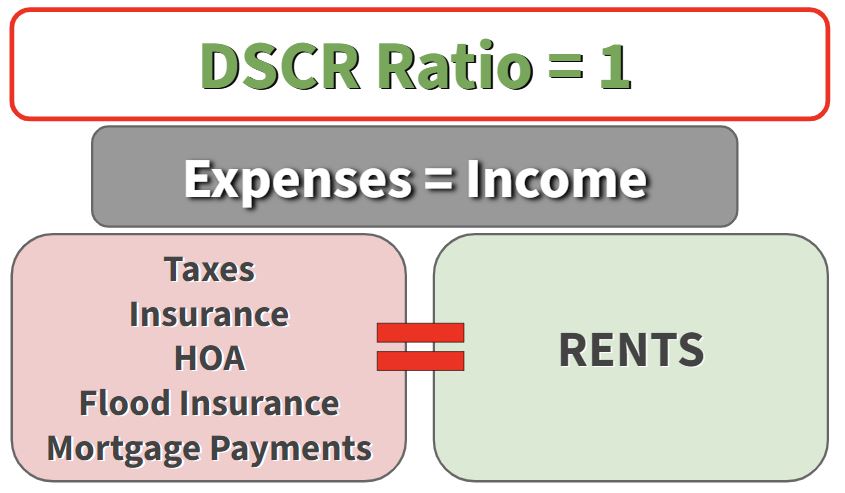
The DSCR ratio is a simple calculation that compares income to expenses—the cash flowing in vs. the cash flowing out—on a single property.

Essentially, a DSCR ratio of 1 simply means that the income and expenses equal each other.

The DSCR ratio measures the break-even point of your investment. So long as you bring in the same amount of money as you invest, you won’t lose anything.

However, a DSCR ratio of higher-than-1 is even better. A higher ratio means that you’re bringing in more money than you’re spending—generating cash flow and building wealth.

Use Our DSCR Loan Calculator

To help you find your projected rents, expenses, and ratio, you can use our DSCR loan calculator. It’s a free, user-friendly download that will help you estimate your DSCR ratio to see if your investment property is going to break even.

Once you have an estimate for your ratio, it’s time to start looking for loans. 

Finding a DSCR Loan

Banks typically like to see ratios of 1 or higher. 

However, if you’re investing in rental properties that might not break even, you can often still find a loan, but you might be stuck with higher rates.

You can also check out our website and inquire about the DSCR options we offer


Read the full article here.

Watch the full video here:

by

DSCR ratio and interest rates explained

Today we are going to discuss the DSCR ratio and explain interest rates. Many investors are intimidated by DSCR loans and are unsure as to where to start. However, the main thing that you need to take into consideration is whether or not the property cash flows. This in turn will have a significant impact on the interest rates for you DSCR loan. Let’s take a closer look! 

Calculating a DSCR ratio. 

Let’s go over how to calculate DSCR quickly and understand what it means for your property. The DSCR ratio is found by comparing a property’s income to its expenses. To clarify, the property’s income is the rent that is received for the property. On the other hand, the expenses include the monthly mortgage payment, taxes, insurance, and HOA. A ratio of greater than 1 means the property is cash flowing, which is what both you and your lender want to see. Also, for a DSCR loan, the higher this ratio is, the better the terms your loan will have.

Negative DSCR Loans

Contrary to popular belief, you can still find a DSCR product for negative cash flow properties. However, these loans come at a higher interest rate.To clarify, a negative DSCR loan is used when someone gets stuck with a property they can’t sell. Under these circumstances, having very little income on the property would be better than none at all. This is why it is imperative that you have a cash flowing property from day one! By taking your time and working through the numbers, you can in turn avoid being stuck with a property that is not helping you to move forward.

Knowing your thresholds! 

There are certain thresholds when you calculate DSCR loans. When you break these thresholds, you get a better rate. And better rates mean… more cash flow! Your monthly payments will lower.Let’s go over what some of these thresholds will look like.

Property Income Property Expenses DSCR ratio  Profit  Interest Rate for DSCR
$2,000 $1,590 1.25 25% 7.25%
$1,500 $1,590 .94 9%+

Remember, anytime you can lower the rate, that’s cash flow that goes into your pocket. In this example, the difference between a negative DSCR and a 1.25 is about $220/month on your payment. Over the course of a year, that adds up to $2,600. If you have 5 rental properties, that’s $13,000/year. At 10 rental properties, it’s a $26,000 difference!

Know your numbers to get ahead! 

If real estate investing is going to be your career or retirement plan, buying properties that you know will cash flow is vital. A couple hundred bucks a month can snowball into hundreds of thousands over time.This is why it’s important to know how to calculate DSCR quickly when you’re looking at buying a new property. Never put a contract on a rental property when you’re not sure if the cash flow fits your goals.

How can you calculate a DSCR ratio quickly?

To help keep the numbers straight when you calculate DSCR, you can download our free, simple DSCR calculator at this link.

Watch our most recent video to find out more about: How to calculate a DSCR ratio

If you have any other questions about how to calculate DSCR (or how to get a DSCR loan!), send us an email at Info@TheCashFlowCompany.com.

by

What can you expect to pay on your DSCR loan interest rates? Here’s what it is (and why it matters).

You can still find a DSCR product for ratio 1 or negative cash flow properties.

DSCR loans have certain ratio thresholds. When you break these thresholds, your rate gets better. And better rates mean lower monthly payments. Which means… more cash flow!

Let’s go over some of these thresholds for DSCR loan interest rates.

Loans for a 1.25 DSCR

Say we have a property with $1,590 worth of monthly expenses, which we can charge a $2,000 rent on. Divide the rent by the expenses, and we get a DSCR of about 1.26.

One way of thinking about this is that the property is profiting 25% over the expenses. That’s good for the underwriter (and it’s good for you), so you’ll get a lower interest rate.

1.25 is a major threshold for DSCR lenders. In the current market at the beginning of 2022, the rate for a 1.25 DSCR is around 7.25%.

DSCR Loan Interest Rates for a 1 or Lower Ratio

If a property has negative cash flow, say 0.94, then the average interest rate would be 9+% on a DSCR loan.

For a breakeven ratio of 1, the typical interest rate right now would be more like 7.75%.

The Difference in DSCR Loan Interest Rates

Anytime you can lower the rate, that’s cash flow that goes into your pocket.

The difference between a negative DSCR and a 1.25 is about $220/month on your payment. Over the course of a year, that adds up to $2,600. If you have 5 rental properties, that’s $13,000/year. At 10 rental properties, it’s a $26,000 difference!

If real estate investing is going to be your career or retirement plan, buying properties that you know will cash flow is vital. A couple hundred bucks a month can snowball into hundreds of thousands over time.

This is why it’s important to know how to calculate DSCR quickly when you’re looking at buying a new property. Never put a contract on a rental property when you’re not sure if the cash flow fits your goals.

Read the full article here.

Watch the video here:

https://youtu.be/o5js06y–qM

by

Quick ‘n Easy DSCR Calculation

Categories:

Your DSCR calculation made easy with our free loan calculator.

Don’t be intimidated by a DSCR loan. If the property cash flows, then you have a pretty good shot at getting approved.

And there’s a simple way to find out the cash flow of a rental property: the debt service coverage ratio.

Underwriters use this ratio to determine if a property is positively cash flowing. It’s an important metric to understand if you want to maximize your leverage and get the most out of your investments.

Now, let’s go over how to calculate DSCR quickly and understand what it means for your property.

What Is a DSCR in Real Estate?

Firstly, let’s define what DSCR is. It’s a ratio that compares a property’s income to its expenses.

You calculate DSCR by dividing the property’s income (rents) by its expenses (monthly mortgage payment, taxes, insurance, and HOA if applicable). A ratio of greater than 1 means the property is cash flowing, which is what both you and your lender want to see.

So, the higher the ratio, the better the cash flow, and the more money in your pocket.

For a DSCR loan, the higher this ratio is, the better the terms your loan will have.

Expenses & Income for DSCR Calculation

Next, to find out the expenses your DSCR loan will consider, you’ll add together four items:

  • Mortgage
  • Property Tax
  • Insurance
  • HOA Fees

Finally, to find out the income, you’ll need to check out what rents are in the area for comparable properties.

How to Calculate DSCR Quickly

To help keep all these numbers straight when you calculate DSCR, you can download our free, simple DSCR calculator at this link.

Read the full article here.

Watch the video here:

by

Why You Need To Refinance a BRRRR

Categories:

Why can’t you just keep the first loan on your BRRRR? Here are the reasons to refinance a BRRRR.

The BRRRR strategy uses two loans. The second one is for the refinance – the third “R” in BRRRR.

You buy with a hard money or bridge loan, but eventually you need new funding for the property. There are 3 reasons why you need to refinance.

1. Term Length

Hard money and bridge loans are useful when used right, but only good for a couple of months. How BRRRR works is that renting your property will require a second, longer loan. However long you’ll want to hold the rental unit is how long your refinance loan will need to be.

2. Rate When You Refinance a BRRRR

Hard money loans won’t have a good long-term interest rate. This second refinance loan should give you a much lower rate. Not only should a refinance create net worth, but it should also give you good cash flow on the property.

3. Capture Equity

BRRRR refinances tend to grab at least 25% of the house’s purchase price in added net worth. Check out this post to see how the numbers break down on a BRRRR refinance.

When To Refinance a BRRRR

Want the greatest profit on your project? Have the refinance loan ready by the time you buy your under-market property.

If you need help finding the right refinance loan, send us an email at Info@TheCashFlowCompany.com.

Read the full article here.

Watch the video here:

by

Using investor loans to make your BRRRR profitable.

The BRRRR strategy uses two loans. The first is the “B” of BRRRR – buy. Does it matter what kind of loan you use?

There are 3 problems this first loan needs to solve.

1. Under-Market Property

To make this strategy work, the property you buy must be under-market. This is different from retail investing, where you buy and rent an at-market, rental-ready property.

An undervalued BRRRR property holds the potential to bring your net worth up. It’s a property that closes quickly and cheaply – even if it’s in rough shape.

Ideally, your BRRRR buy loan covers the entire cost of the house. This eliminates the need for a down payment, making the process more repeatable (and profitable).

2. Quick Closing with Investor Loans for BRRRR

Why would there ever be a house selling for under-market? There are many conditions that bring a property to this point, such as a sudden move or foreclosure. Whatever the circumstance, the homeowner, wholesaler, bank, or whoever owns the house will want it gone and the money in their hand ASAP.

Your buy loan will need to close fast, with minimal underwriting, paperwork, or other hassles that come with traditional loans.

3. Rehab

Although profitable, an under-market property usually comes with a lot of necessary repairs. Many BRRRRs have construction budgets in the tens of thousands of dollars.

If that money comes out of your bank account, then it almost defeats the purpose of a value-add property. But if you use the buy loan to leverage all rehab costs on a BRRRR, more cash stays in your pocket.

The Best Investor Loans for BRRRR

An investor-specific loan, like a bridge loan or hard money, will check all three of these boxes.

While short-term investor-friendly loans make the perfect buy loan, you’ll need to refinance later in the BRRRR process.

Read the full article here.

Watch the video here:

https://youtu.be/_cdQkaaXxAw

by

3 Key Fundamentals of BRRRR

Categories:

The top 3 fundamentals to keep in mind when learning BRRRR.

“BRRRR” stands for “buy, rehab, rent, refinance, repeat.” It’s a process for capturing equity and creating cash flow on rental properties.

We’ve helped investors through this process for over 15 years.

Here are the 3 key fundamentals of BRRRR we’ve seen make these transactions successful.

Key Fundamental #1: Building a BRRRR Team

Firstly, you have to find off-market properties.

The really good under-market BRRRR properties won’t just jump into your lap. These properties require a little digging, and – more importantly – a team to help you.

You’ll need to know wholesalers, real estate agents, other investors, and anyone else who can help you locate good undermarket properties.

(It’s also an advantage to keep lenders on your team so you can close fast on these great properties once you find them.)

Key Fundamental #2: The Money Side

“It takes money to make money.”

If you can learn the basics about the costs of your BRRRR projects, then you can squeeze more money out of each project.

We always say that there’s money in the money. Do the research to learn about real estate before your first investment, and you’ll be miles ahead of other investors.

Key Fundamental #3: Using the Right Leverage

Yes, it takes money to make money, but it doesn’t have to be your money.

Plan for and understand the entire BRRRR process, and leverage can work to 10x your net worth.

For More on BRRRR

Overall, this only brushes the surface of BRRRR. Over the coming weeks, we’ll visit each of these topics in much more detail. Why do you use two loans? How can you do this with zero money down? How do you go about a refinance?

If you have a deal now you’d like us to look at for you, send us an email at Info@TheCashFlowCompany.com.

Read the full article here.

Watch the video here:

https://youtu.be/JbO2YFxuPmw

by