How to Raise Your DSCR Ratio

Categories:

The DSCR ratio measures the break-even point of your investment. How can you leverage your money to actually build wealth?

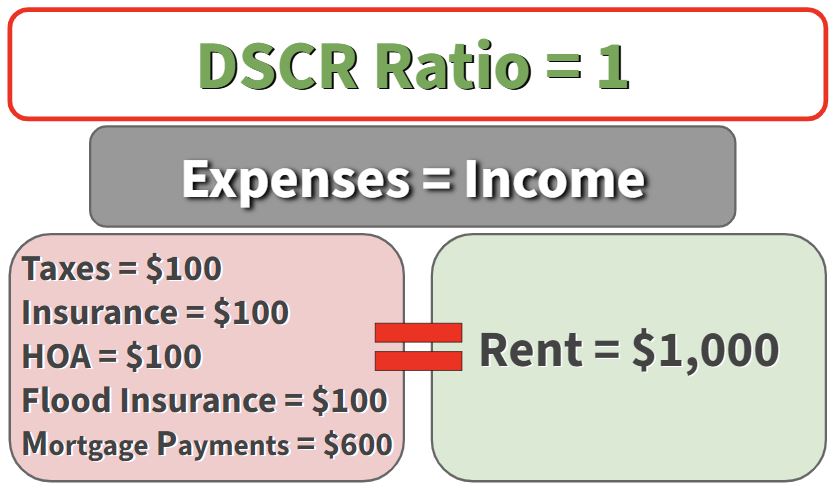
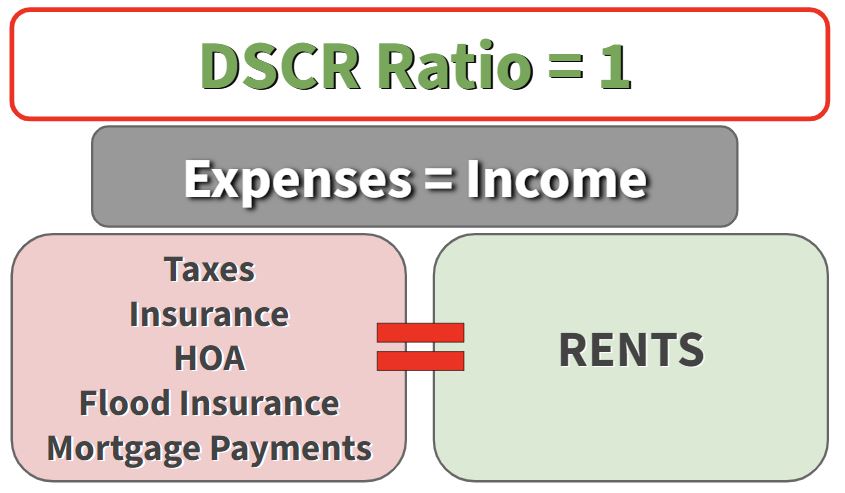
A DSCR ratio of 1 means that the expenses of your rental property are equal to the income you receive through rents. So long as you bring in the same amount of money as you invest, you won’t lose anything.

However, a DSCR ratio of higher-than-1 is even better. A higher ratio means that you’re bringing in more money than you’re spending—generating cash flow and building wealth.

Raising the DSCR Ratio

You can get a higher DSCR ratio in a few ways. 

1. Be mindful of your expenses.

Especially if you’re a new investor, make sure you’re shopping around for the best deals. 

Before you buy a property, research the typical costs for the area. Is there an HOA? Will you need any specialized insurance? Typical taxes?

Knowing these things beforehand can help you make more informed decisions and keep your costs lower.

2. Set rents intentionally.

Look at the average rents in your area. Remember, the higher your income (rents), the higher your DSCR ratio.

Let’s look at an example:

When rents equal our cash out, lenders may see your loan as “safe,” but it’s not making you any money. 

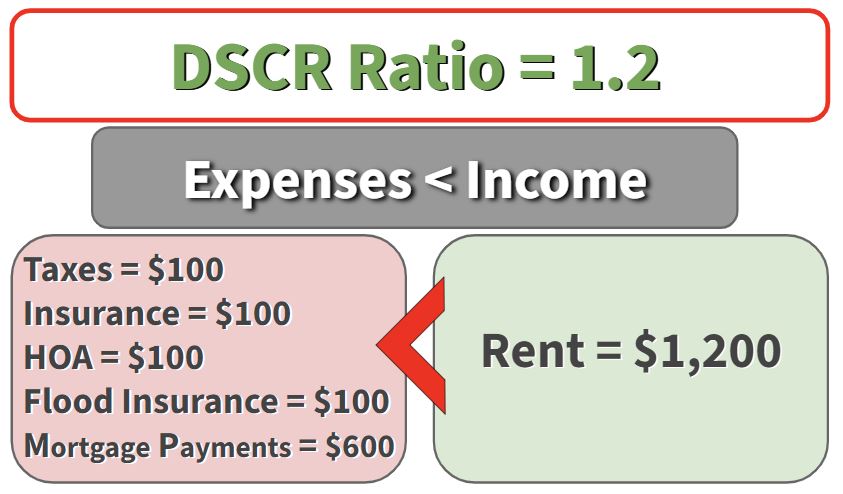
Instead, raising rents can help you end up with a higher DSCR ratio (and more money in your pocket).

When you raise rents, simply divide your expenses by your income (rents) to find your new ratio.

By raising rents by $200, we end up with a much better ratio (1.2) that actually creates wealth instead of simply covering expenses. 

As an investor, the goal is to always make decisions that can create generational wealth for us in the years to come. Even small adjustments in rents and expenses can have a significant impact on your ratio. Do your research and your math when you work with rental properties!


Read the full article here.

Watch the full video here:

by

A DSCR loan calculator is an invaluable tool for real estate investors.

In the investment world, rental properties are a great source of wealth. The financial potential in fixing up places to then rent out is a very lucrative model, especially in the current housing economy.

What is a DSCR Loan?

DSCR loans are specifically designed for real estate investors who hold rental properties. 

The acronym literally stands for Debt-Service Coverage Ratio which is a fancy way of saying that the loan cares about the cash flow of a property.

The great news, especially for new investors, is that accessing these loans is less dependent on personal or business income. Even if you’ve just begun a new business, qualification for DSCR depends almost entirely on the potential value and expenses of the rental property itself. 

What is a DSCR Ratio?

The DSCR ratio is a simple calculation that compares income to expenses—the cash flowing in vs. the cash flowing out—on a single property.

Essentially, a DSCR ratio of 1 simply means that the income and expenses equal each other.

The DSCR ratio measures the break-even point of your investment. So long as you bring in the same amount of money as you invest, you won’t lose anything.

However, a DSCR ratio of higher-than-1 is even better. A higher ratio means that you’re bringing in more money than you’re spending—generating cash flow and building wealth.

Raising the Ratio

You can get a higher DSCR ratio in a few ways. 

1. Be mindful of your expenses.

Especially if you’re a new investor, make sure you’re shopping around for the best deals. 

Before you buy a property, research the typical costs for the area. Is there an HOA? Will you need any specialized insurance? Typical taxes?

Knowing these things beforehand can help you make more informed decisions and keep your costs lower.

2. Set rents intentionally.

Look at the average rents in your area. Remember, the higher your income (rents), the higher your DSCR ratio.

Let’s look at an example:

When rents equal our cash out, lenders may see your loan as “safe,” but it’s not making you any money. 

Instead, raising rents can help you end up with a higher DSCR ratio (and more money in your pocket).

When you raise rents, simply divide your expenses by your income (rents) to find your new ratio.

By raising rents by $200, we end up with a much better ratio (1.2) that actually creates wealth instead of simply covering expenses. 

Use Our DSCR Loan Calculator

To help you find your projected rents, expenses, and ratio, you can use our DSCR loan calculator. It’s a free, user-friendly download that will help you estimate your DSCR ratio to see if your investment property is going to break even.

Once you have an estimate for your ratio, it’s time to start looking for loans. 

Finding a DSCR Loan

Banks typically like to see ratios of 1 or higher. 

However, if you’re working with a property that might not break even, you can often still find a loan, but you might be stuck with higher rates.

You can also check out our website and inquire about the DSCR options we offer

Here at The Cash Flow Company, we scour the market to make sure we offer competitive rates and connect good people with good loans.

If you have questions or want to talk about a loan, reach out to us at Mike@TheCashFlowCompany.com.

by

Will Interest Rates Go Down in 2024?

Categories:

If you’re in the real estate investing game, you’re probably wondering, “Will interest rates go down in 2024?” The 2023 market has been tough, but good news is on the way!

2023 has been an interesting year for investors as we’ve faced exceptionally high interest rates. At times, this has been stressful, but how can we use this information to help us prepare for the next year of opportunities?

Currently, rates are between 7% to a little over 7% for people looking to buy an owner-occupied property with a 30-year fixed mortgage.

The Fed has nearly reached their max which means lower rates are coming! And not just on housing; credit cards, student loans, etc. will all start seeing lower interest rates.

This is great news, but how does it impact you in real terms?

How Interest Rates Effect Real Estate Investing

As interest rates go down, you’ll have the opportunity to increase your cash flow just by refinancing or being smart with your purchases. 

The lower the interest rate, the more money goes into your own pocket in each deal.

But how does the math work?

If you’re looking at your finances, and you can afford $2,000/month in payments, here’s the breakdown:

  • In total, you can afford $2,000 a month in payments 
  • Subtract $100 for taxes
  • Subtract $100 for insurance
  • TOTAL: Investor can afford about $1,800/month that goes towards the mortgage

Now, let’s run that through different interest rates. 

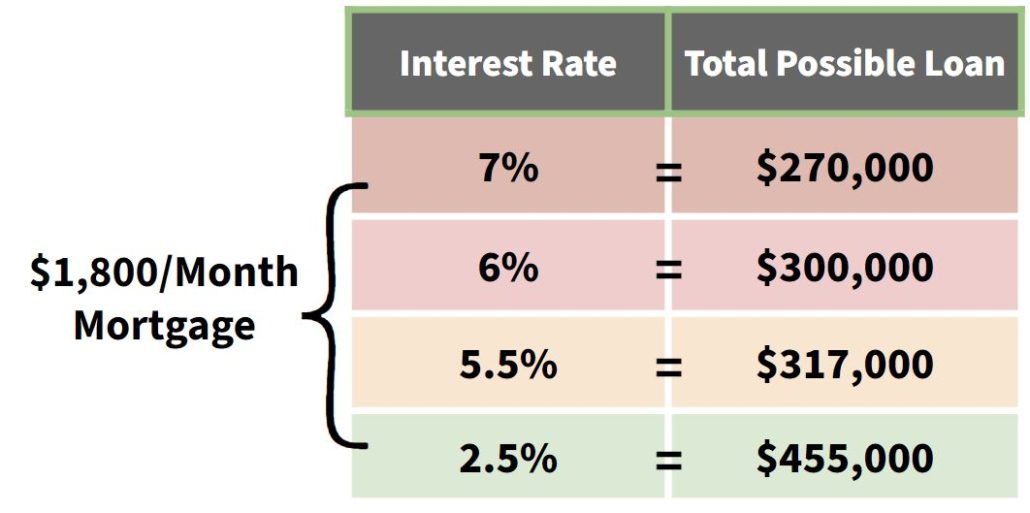
Even though you can afford only $1,800/month towards a mortgage, the interest rate significantly changes the loan amount. This in turn changes the types of property you can pursue:

Even a change from a 7% to a 6% interest rate results in an 11% increase in the price of a home you can afford. 

As interest rates go down, more people can access what’s on the market. 

If you’re in real estate investing, having homes ready to flip in 2024 to meet that pent up demand as interest rates drop can make a huge difference for you.

Make a Game Plan

Even though rates are still high, based on these evidence-based real estate market predictions, you should start buying and getting properties ready to flip by the end of this year.

Real estate markets move quickly, so you’ll want to be ready for those falling rates when the market demand spikes. 

If you’re wondering why should I buy when interest rates are so high? here’s the deal: If you buy right now when interest rates are high, you can cash flow them as rates fall. This makes your properties more valuable when you flip them, and cash flow is going to increase.


Read the full article here.

Watch the full video here:

by

Interest rates are currently high. This can create a discouraging market for new investors, but it’s important to look at the patterns of those interest rates so we can learn how to create wealth investing in real estate.

Real estate investing is one of the most accessible ways to create generational wealth. It takes two things to be successful:

  1. Leverage: knowing how to use other people’s money (bank loans, etc.) to turn a profit
  2. Math: know how the numbers work so you can use them to your advantage.

Even though interest rates are currently high, if we understand how to use leverage and math to our benefit, we’ll be creating wealth in no time.

It Comes Down to Numbers (and Interest Rates)

We’re all in real estate investing to create income, wealth, a better life. Interest rates are a significant aspect of that. We need to understand exactly how to leverage high interest rates to help you create the wealth you’re here for.

Here’s the good news: interest rates will likely go down soon.

If you buy a property when rates are high, you can refinance when rates drop to increase both your income and equity. 

For Example…

  • Let’s say you have a 4-plex that you’re going to purchase with the following figures:
    • 4-Plex (Initial Numbers)
      • Loan Amount: $500,000 
      • Interest Rate: 8.5% 
      • Monthly Payments: $3,800

    As we said earlier, rates are likely to decrease soon. We’re heading into a big election year which tends to drop rates, and the Fed is hitting their apex. So what happens when the rates decrease and we look at refinancing?

    • 4-Plex (Refinanced!)
      • Loan Amount: $500,000 
      • Interest Rate: 7.5%
      • Monthly Payments: $3,496 (+ $360 income/month)

Even if interest rates only drop by 1%, you still end up with over $4,000/year more in your pocket.

Similarly, because of the  shifting value, that initial $500,000 now has a value of $550,000 (10% higher than before).

If all you do is refinance when rates drop by 1%, you can easily build income and equity. Imagine the strides you can take when interest rates drop even further.

This same strategy applies to portfolio/multi-family homes. When rates drop, you can look into refinancing any investment property to explore these possibilities and take advantage of this opportunity to build generational wealth.


Read the full article here.

Watch the full video here:

by
Credit scores and loans

Leverage/loans are the key to building a successful real estate business.  Credit scores are becoming more and more of a factor on who is approved for loans and or denied.

All serious investors must understand how to win at the lending game. A large part of that is understanding and managing your credit score.

Better scores equal better loans.  Better loans help create wealth and income faster.


How Your Credit Score Impacts Loan Approval

Lenders use your credit score when deciding if and how they offer you credit, such as mortgage, car loan or a credit card. Your score also affects terms and rates associated with these loans.

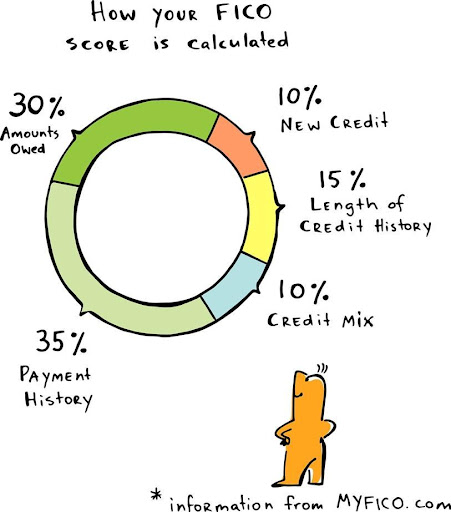
Your payment history is the cornerstone of your credit score, but other elements also play a part. These could include:

Your credit score is a number.

Lenders use your credit score to assess your risk as a borrower, using data reported to credit bureaus such as Equifax(r), Experian(r), and TransUnion(r).

Your credit score can have an immense impact on your life. It can determine whether a lender approves of an application for a mortgage.

Your credit score takes into account how you’ve paid past bills and the debt that’s currently outstanding, along with your mix of accounts (credit cards, retail accounts, installment loans (car or student loans) and finance company accounts). Lenders also look at how long it has been used; generally speaking it should remain under 30%.

Your credit score is a factor.

Many individuals don’t realize how important their credit score is in loan approval decisions. Lenders use it to assess whether someone should qualify for mortgage, business loans as well as determine interest rates that borrowers will pay on these loans.

One of the key factors affecting one’s credit score includes length of history, debt-to-credit ratio, payment history and types of accounts held. An equally significant element is how long since any negative event such as missed payments or bankruptcy occurred. Either can have an enormously detrimental effect on one’s score.

Lenders prefer to see a mix of retail, finance company and installment loans in your credit profile. Too many new accounts may raise red flags.

Your credit score is a red flag.

Lenders use credit scores to gauge whether or not someone will repay what they borrow. A higher score demonstrates responsible financial behavior.  Higher scores will help qualify an applicant for better terms on loans.

Your credit score is determined by many factors, including payment history, amounts owed, length of credit history, new accounts opened and mix. One keyway you can improve your score is paying debts on time: this component accounts for 35% of FICO scores and 30% of VantageScores.

Excessive new account activity can also lower a credit score. This factor is measured by the total number of hard inquiries on your report; these could include applications for new credit as well as inquiries made by lenders to pre-qualify you for loans or credit cards.

Your credit score is a good thing.

Your credit score demonstrates your reliability as a borrower and determines the likelihood that a lender will approve of you for a loan. Furthermore, it affects interest rates you will pay, potentially saving thousands over the course of your loan’s lifespan.

FICO or VantageScore scores are calculated based on information found in your credit reports. This information comes from the three major bureaus, which contain payment history, utilization rates and age information of accounts.

Setting and making regular on-time payments are two effective strategies for increasing your scores, along with keeping revolving balances to an absolute minimum. Lenders tend to prefer when their borrowers use no more than 30 percent of available revolving credit available.  Having multiple types of loans like mortgages, auto loans, and credit cards may also boost your score. Keep in mind that your score may change with new information appearing in your report over time.


Need a loan to increase your score in less than 30 days?  Credit score usage loan.

How Your Credit Score Impacts Loan Approval. Credit usage loan.

Credit scores and loans


by

Fun fact: What the Fed is doing now will create more opportunities for generational wealth and income in the very near future.

Interest rates are currently high. This can create a discouraging market for new investors, but it’s important to look at the patterns of those interest rates so we can project where they’ll be over the next few years.

Real estate investing is one of the most accessible ways to create generational wealth. It takes two things to be successful:

  1. Leverage: knowing how to use other people’s money (bank loans, etc.) to turn a profit
  2. Math: know how the numbers work so you can use them to your advantage.

Even though interest rates are currently high, if we understand how to use leverage and math to our benefit, we’ll be creating wealth in no time.

It Comes Down to Numbers (and Interest Rates)

We’re all in real estate investing to create income, wealth, a better life. Interest rates are a significant aspect of that. We need to understand exactly how to leverage high interest rates to help you create the wealth you’re here for.

Here’s the good news: interest rates will likely go down soon.

If you buy a property when rates are high, you can refinance when rates drop to increase both your income and equity. 

For Example…

Let’s say you have a 4-plex that you’re going to purchase with the following figures:

  • 4-Plex (Initial Numbers)
    • Loan Amount: $500,000 
    • Interest Rate: 8.5% 
    • Monthly Payments: $3,800

As we said earlier, rates are likely to decrease soon. We’re heading into a big election year which tends to drop rates, and the Fed is hitting their apex. So what happens when the rates decrease and we look at refinancing?

  • 4-Plex (Refinanced!)
    • Loan Amount: $500,000 
    • Interest Rate: 7.5%
    • Monthly Payments: $3,496 (+ $360 income/month)

Even if interest rates only drop by 1%, you still end up with over $4,000/year more in your pocket.

Similarly, because of the  shifting value, that initial $500,000 now has a value of $550,000 (10% higher than before).

If all you do is refinance when rates drop by 1%, you can easily build income and equity. Imagine the strides you can take when interest rates drop even further.

This same strategy applies to portfolio/multi-family homes. When rates drop, you can look into refinancing any investment property to explore these possibilities and take advantage of this opportunity to build generational wealth.

Falling Interest Rates Generate Generational Wealth… If You’re Prepared.

If you buy when interest rates are high, you’re going to increase your income as rates fall. You’re also going to increase your net worth even if you don’t sell them. It’s a great way to create the income you need to begin a sustainable investment cycle. 

Also, this strategy also naturally lets you diversify lines of credit, cross liens, etc. that allow you to increase your portfolio.

Time to Buy

Here’s the bottom line: rates are going to fall, and if you buy now, you’ll build income without needing to invest in additional investments. 

This is the time to be buying investment properties.

We’re moving into a market where there’s going to be a lot of demand for properties. As rates fall, more people will be looking to buy. Get ahead of that rush, and use the dropping rates to put money in your pocket.

Resources

It’s important to keep your finger on the pulse as a real estate investor — especially if you’re serious about generating wealth. We have a weekly Investor Mortgage Report that keeps you updated on DSCRs, bank rates, private money, and market trends so you can be an informed investor.

Things change rapidly. Rates may rise through the end of 2023, but the moment they start to fall, you want to be prepared.

If you’d like to be put on the Investor Report email list, or if you have questions about how to get started as an investor, reach out to us at Mike@TheCashFlowCompany.com.

You can also check out our YouTube channel for more investment tips and tricks.

by

What have we seen in 2023 and how does it inform our real estate predictions for 2024?

When you’ve been in the real estate investing industry for as long as we have, you start noticing trends. 

2023 has been an interesting year for investors as we’ve faced exceptionally high interest rates. At times, this has been stressful, but how can we use this information to help us prepare for the next year of opportunities?

What Have We Seen in 2023?

High interest rates! 

Currently, rates are between 7% to a little over 7% for people looking to buy an owner-occupied property with a 30-year fixed mortgage.

According to Realtor.com, we’re also facing a shortage of homes for sale. Although there is high interest in buying single-family homes, there’s a shortage in the market. 

Affordability has also been a challenge for buyers and investors alike. All buyers need to afford and qualify for the mortgage in order to move forward.

All in all, it’s been a tough market for real estate. Smart investing has been more necessary than ever before.

Predicting 2024: A Shifting Market

Demand

Moving into 2024, we’re going to see even more repercussions from the pent up demand from 2023. People want to buy homes, and the market is going to get competitive. 

Affordability Concerns

So many young adults are living with friends or family out of necessity. Multi-family households are increasingly common in response to affordability concerns.

As these adults get older, the desire to live in their own space will only get stronger.

Election Year Impact

Even though the Fed isn’t tied to either Democrats or Republicans, there’s always pressure on them to make sure the American people feel good about the housing market. 

Pay attention to how interest rates respond to election pressures.

Dropping Rates

The Fed has nearly reached their max which means lower rates are coming! And not just on housing; credit cards, student loans, etc. will all start seeing lower interest rates. 

Although it’s tricky to pinpoint exactly how low the rates will drop, our real estate market predictions are confident that lower rates are coming.


Read the full article here.

Watch the full video here:

by
Utilization Rate Affects Your Credit Score

When you apply for a loan, the lender will look at your credit report to assess your creditworthiness. One key metric lenders use is your revolving debt utilization rate, or the percentage of your available credit you’re using. A high revolving utilization ratio can make it harder to get approved for loans. Knowing how your revolving utilization rate impacts your credit score and taking preventative steps to keep it low can help you improve your chances of getting the loan approval you want.

What is a revolving debt utilization rate?

A revolving debt utilization rate is the amount of debt you currently owe on revolving credit accounts (such as credit cards) divided by your total credit limit on those accounts. It’s calculated by adding up the outstanding balances of your revolving credit, like credit cards and home equity lines of credit, and then subtracting the respective credit limits from those totals to find the debt-to-credit ratio. You can calculate this ratio by tallying up the outstanding balances on all your revolving credit and then dividing the result by the respective credit limit to find your utilization percentage.

Your credit utilization rate is used to predict your credit risk and has a significant impact on your FICO credit scores, making it the second-most important factor behind only your payment history in the scoring model. The higher your revolving utilization, the more likely you are to have difficulty repaying what you borrow. For example, if you have a credit card with a balance of $2,000 and a credit limit of $10,000, your utilization rate is 20%.

However, it’s important to remember that revolving debt utilization rates only include revolving credit accounts such as credit cards and home equity lines of credit; they don’t consider other types of debt, like installment loans, which have a set repayment schedule. For this reason, credit card balances tend to have a greater impact on your credit scores than mortgage and auto loans, which are reported as installment debt.

What is a good revolving debt utilization rate?

Lenders typically prefer to see that borrowers aren’t using more than 30% of their revolving credit limit. Carrying too much debt could indicate you’re having trouble repaying what you’ve borrowed or may be struggling financially.

In addition, many lenders have their own guidelines for what is considered a “good” revolving debt utilization rate. Some lenders will decline applications for credit or will only approve applicants with revolving debt utilization rates below certain thresholds.

Keeping your revolving credit utilization low is a great way to improve your credit score, and it can also save you money on interest payments. To lower your utilization rate, make sure you pay off your credit card balances each month, and try to keep your balances as low as possible. If you have trouble paying off your balances each month, call your credit card company to see if they can give you more time to pay your bill or set up automatic payments.


Find out how a loan can raise your score in 30 days or less


Utilization Rate Affects Your Credit Score.

#credit score loan


by

How Do Usage Loans Boost Credit?

Categories:

If you’ve ever wondered how to boost your credit score overnight with usage loans, you’ve come to the right place.

Having a strong credit score is like having a really good baseball team. It doesn’t guarantee an instant win, but it sure helps! The better your team (and credit score), the more home runs you can look forward to in your investment season. 

When you win the credit score game, you win countless opportunities. These include good rates, good loans, and more opportunities that can, in the end, add up to hundreds of thousands of dollars.

What is a Good Credit Score and Why is it Important?

Typically, banks consider a credit score “good” when it’s 700 or higher. 

The higher your score, the better your chances of taking home a big trophy. 

It’s important to note that not every lender is equally concerned with credit score. Some private money lenders care more about the specific deal or their relationship with the investor. This can be really helpful to keep in mind if you need to apply for a usage loan or some other method of raising your credit score.

How Can a 60-90 Day Note or Usage Loans Help?

If those first two strategies don’t really work for you, then you can always take a third approach: find a loan.

You can apply for a short-term 60 or 90 day note. These are available from most banks, or you could look to family and friends for the small loan. You can also go through private lenders like us for a usage loan

A usage loan allows you to move the credit card balance off of that card (and away from your credit score). It can fix usage issues instantly as might be obvious by the loan’s name.

Also, by moving that balance to a different place, you’ll often find better deals which can allow you to pay off the usage loan more easily than you could have paid off the credit card.

We Can Help!

If you take one, two, or all three approaches to boosting your credit score, then you should see better deals flying your way almost immediately.

If you want to discuss options such as usage loans or even business credit cards, reach out to us at Info@TheCashFlowCompany.com

Our team is always ready to help.

We’re eager to set you on a path that helps you make the kind of money you need to live the life you want.


Read the full article here.

Watch the full video here:

by

2024 Real Estate Market Predictions

Categories:

What have we seen in 2023 and how does it inform our real estate market predictions for 2024?

When you’ve been in the real estate investing industry for as long as we have, you start noticing trends. 

2023 has been an interesting year for investors as we’ve faced exceptionally high interest rates. At times, this has been stressful, but how can we use this information to help us prepare for the next year of opportunities?

What Have We Seen in 2023?

High interest rates! 

Currently, rates are between 7% to a little over 7% for people looking to buy an owner-occupied property with a 30-year fixed mortgage.

According to Realtor.com, we’re also facing a shortage of homes for sale. Although there is high interest in buying single-family homes, there’s a shortage in the market. 

Affordability has also been a challenge for buyers and investors alike. All buyers need to afford and qualify for the mortgage in order to move forward.

All in all, it’s been a tough market for real estate. Smart investing has been more necessary than ever before.

2024: A Shifting Market

Demand

Moving into 2024, we’re going to see even more repercussions from the pent up demand from 2023. People want to buy homes, and the market is going to get competitive. 

Affordability Concerns

So many young adults are living with friends or family out of necessity. Multi-family households are increasingly common in response to affordability concerns.

As these adults get older, the desire to live in their own space will only get stronger.

Election Year Impact

Even though the Fed isn’t tied to either Democrats or Republicans, there’s always pressure on them to make sure the American people feel good about the housing market. 

Pay attention to how interest rates respond to election pressures.

Dropping Rates

The Fed has nearly reached their max which means lower rates are coming! And not just on housing; credit cards, student loans, etc. will all start seeing lower interest rates. 

Although it’s tricky to pinpoint exactly how low the rates will drop, our real estate market predictions are confident that lower rates are coming.

The Economics Behind the 2024 Market

As interest rates go down, you’ll have the opportunity to increase your cash flow just by refinancing or being smart with your purchases. 

The lower the interest rate, the more money goes into your own pocket in each deal.

But how does the math work?

If you’re looking at your finances, and you think you can afford approximately $2,000 for a monthly mortgage payment, here’s the breakdown:

  • In total, you can afford $2,000 a month in payments 
  • Subtract $100 for taxes
  • Subtract $100 for insurance
  • TOTAL: Investor can afford about $1,800/month that goes towards the mortgage

Now, let’s run that through different interest rates. 

Even though you can afford only $1,800/month towards a mortgage, the interest rate significantly changes the loan amount which in turn changes the types of property you can pursue:

Even a change from a 7% to a 6% interest rate results in an 11% increase in the price of a home you can afford. 

As interest rates go down, more people can access what’s on the market. 

If you’re in real estate investing, having homes ready to flip in 2024 to meet that pent up demand as interest rates drop can make a huge difference for you.

Make a Game Plan

Even though rates are still high, based on these evidence-based real estate market predictions, you should start buying and getting properties ready to flip by the end of this year.

Real estate markets move quickly, so you’ll want to be ready for those falling rates when the market demand spikes. 

If you’re wondering why should I buy when interest rates are so high? here’s the deal: If you buy right now when interest rates are high, you can cash flow them as rates fall. This makes your properties more valuable when you flip them, and cash flow is going to increase.

We’re Here to Help

As a real estate investor, you’ve got to keep up on interest rates. If you need somewhere to start, you can contact us to sign up for our weekly mortgage report. It comes to your inbox and tells you what’s happening in the mortgage industry that impacts you as an investor.

We’re also happy to answer any questions you have about preparing for this upcoming year. For questions or to sign up for our mortgage report, email us at Info@TheCashflowCompany.com.

Remember, prepare now to keep the money train rolling in 2024!
by