Business credit cards make investing easier and more profitable

It is important as a real estate investor that you discover ways to make investing easier and more profitable. Real estate investing, as opposed to other businesses, relies heavily on financing. To obtain the best real estate financing, you need to have good personal credit scores. As a result, the higher the scores, the better the rates, and most importantly greater leverage. This in turn equals more deals and a faster track to generational wealth. Let’s take a deeper look on how you can make the switch to business credit cards and why they are important to your future success. 

First, the impact business expenses have on personal credit.

The easiest way to raise your personal credit scores is to stop using personal credit for business expenses. This includes personal credit cards, personal lines of credit, and personal loans. Your credit score is greatly impacted by the utilization rate, which is the amount that you use within your credit limit. The higher the utilization rate, the lower your credit score will be. By keeping your utilization rate below 20%, your credit score will increase dramatically. Therefore, moving business expenses off of your personal credit cards will provide not only a better credit score, but it will also open the doors to more lending options.   

Second, make the switch to business credit cards today!

Make the easy jump to business credit cards today and create the financial flexibility you need to achieve your business goals. The right business cards allow you to run and grow your business by keeping charges off of your personal credit report. As long as you pay the cards as agreed, you will be able to create a separation between personal and business expenses. Another benefit to using business credit cards is that the more you use them, the more likely credit card companies will be to increase your limits. Unlike personal credit cards, there is not a utilization rate penalty. Investors are able to spend up to their maximum credit limit. As a result to separating business from personal, it makes investing easier and more profitable.

Third, what do you need for a business credit card?

Business credit cards are the same type of cards that you use now in your personal life, only now they are in your business name. These cards can be obtained in a few hours with the right credit score and set up. What do you need for a business credit card within this lending environment? 

  1. A good to great credit score
  2. A business that looks and acts like a real business
  3. A steady income or proof of a potential income 
  4. Finding and working with the right banks for your investment needs

To be clear, we are not talking about building corporate credit, which can take years to acquire. Instead, business credit cards are the fast and easy way to get your personal credit back on track. Here are just a few of the benefits to making the switch to business credit cards.

  1. You can use them like cash for down payments or earnest deposits
  2. Can be used to pay contractors, even when they don’t accept credit cards
  3. Moving business charges to the business credit cards will increase your credit score
  4. They will decrease your personal DTI (debt to income)
  5. You can benefit from 0% offers

Bonus Pro Tip!

Fund your growth with 0% interest for up to 18 months with many of these business credit cards. By working with large national and super regional banks for both credit cards and unsecured lines of credit, you will in turn have more lending options available. It is important to look for small local banks in order to build relationships and meet your mortgage needs.

Watch our most recent video to find out more about how business credit cards can help you to invest easier and more profitable.

Don’t want to work on your personal score right now? That’s ok! We can help you look into other lending options including OPM (other people’s money). Options like these can provide the money that you need for any deal on any day at the best rates. Contact us today to find out more!


 

by

BRRRR: How to Buy Rental Properties Quickly and Easily

Today we are going to discuss the BRRRR method and how it can help you buy rental properties quickly and easily. If you’re new to real estate investing, BRRRR stands for Buy, Rehab, Rent, Refinance, and Repeat. It’s a popular strategy used by many investors to build a rental property portfolio with minimal upfront costs. So, let’s break it down step-by-step.

Setting Your Goals

Every journey begins with a destination in mind. Therefore, before diving into the BRRRR method, ask yourself:

  • Why do I want to invest in real estate?
  • Where do I want to invest?
  • How many properties do I want to own?
  • How much cash flow do I want to generate?

Take a moment to think about your answers. After all, these goals will guide your entire investment journey.

Searching for Properties

Now, let’s start our search. Look for under-market properties, which are often found through:

  • Wholesalers
  • Investor-friendly Realtors
  • Real estate professionals who specialize in off-market deals

These properties are not listed on the MLS and usually require quick action.

Getting Long-term Loan Approval

Before buying, secure a pre-approval from a long-term lender. This step ensures you know the maximum loan amount you qualify for, which is crucial for the refinancing stage later on.

Buying with a Short-term Loan

Next, use a short term loan, like a hard money loan, to purchase the property. These loans are essential for fast closings, often within days or weeks.

Rehabbing the Property

Once you own the property, it’s time to rehab it. Focus on making necessary repairs to meet the After Repair Value (ARV). Remember, this is a rental property, so avoid high-end finishes. Instead, just make it appealing and functional.

Renting the Property

After the rehab, find a reliable tenant. Therefore, renting the property begins your journey to generating monthly cash flow.

Refinancing

Finally, refinance your short-term loan into a long-term mortgage. This step reduces your monthly payments and locks in a lower interest rate. Having pre-approval helps speed up this process, saving you money.

Repeating the Process

Congratulations! You’ve reached the wealth-building stage. Now, repeat the BRRRR method to continue growing your rental portfolio. Each cycle brings you closer to your financial goals.

Need help getting things set up correctly? Contact us today!  

By following the BRRRR method, you can build a robust rental property portfolio with little to no money out of pocket. So, set your goals, search for the right properties, secure financing, and repeat the process. Happy investing!

Would you like to find out more about the BRRRR method? Watch our most recent video that will further discuss how to buy rentals quickly and easily.

by

Personal credit cards tanking real estate investors’ credit scores is the #1 thing slowing investors down. The solution? A business credit card.

Especially in the beginning, it’s tempting to use personal credit cards to kickstart your investing adventures. However, the high spending demands of real estate investing can drive up usage and tank your personal credit score. In order to protect your personal score, business credit cards are typically the best option.

Switching to business cards may seem daunting at first, but if you know how to prepare and what to look for, it should be smooth sailing.

Requirements for Business Credit Cards

Business credit cards are one of the best ways to make real estate investing easier and more profitable. But what do you need before you start looking for a business credit card?

1. A Business

Typically, you need to have an operating business for at least a year (though there are exceptions)  before applying for a business card. 

This isn’t quite as tricky as it may sound. You need a business account, website, billing information, etc. Essentially, you need proof that you are, in fact, operating an investment business. 

2. A Good Personal Credit Score

Even though you’re applying for a card that won’t report on your personal credit score, approval for the business card is based on your personal credit score.

If you need to raise your personal credit score before applying for a business card, we can help you with that! Usage loans essentially transfer some of that credit card spending into a separate loan that won’t tank your credit score.

Both we and our sister company Hard Money Mike offer usage loans.

3. 1–2 Personal Credit Cards

Obviously, you will need to use your personal credit cards for your investment needs in the beginning. However, if you’ve been using those well, then banks are more likely to approve a business credit card.

All in all, if you have a business, a good credit score, and a couple of credit cards already, it’s fairly easy to start the process of switching to business cards. 

Tools to Help You Find the Right Business Card

We want to make it easy for you to succeed as a real estate investor—no strings attached. The more you know and the more resources you have, the better equipped you are to find the right deals for you.

We’ve already done some of the work for you:

1. Business Credit Card Marketplace

Here at the Cashflow Company, we’ve partnered with Nav to help you find the right business card for you. By inputting a few pieces of information, we’ll let you know what cards match your needs (and won’t report on your personal credit score).

2. Credit Score Checklist

You can use our free credit checklist download to check the health of your credit score. What can you do to improve that score? Does it need some CPR? What are your options?

3. Other Real Estate Investing Tools

Explore our other tools to optimize your investment strategy. We have various calculators, questionnaires, optimizers, and analyzers to walk you through the various steps of the game.

Contact Us!

Credit scores are a very important piece of leverage. We want you to feel equipped and confident that you’re protecting that credit score in a smart way with business credit cards.

If you want to discuss your credit score, a usage loan, or business credit cards, contact us at Info@TheCashFlowCompany.com. We’re always happy to help!


Read the full article here.

Watch the full video here:

by

Building wealth is all about leverage in real estate investing. But what exactly is it, and how can you use it correctly?

If you look at investing, it’s all about using other people’s money. It’s all about leverage. 

Understanding leverage and using it correctly, is the key to unlocking the profits of real estate investing.

Why Leverage Matters

Leverage is the term we use for using someone else’s money (typically in the form of loans) to make a profit for yourself.

Frequently, you will also use a small amount of your own money. But leverage—the opportunities you can access with external funds—is what makes real estate investing accessible regardless of your personal wealth. 

Additionally, leverage allows investors to enter the market quickly, without needing to wait 5 years to save up for a downpayment.

If you know how to get money from others and use it to strategically turn a profit for yourself, you’ll be able to build income out of nearly nothing. 

Different Kinds of Leverage

Leverage comes in many forms:

  • Financial gifts
  • Loans
  • Mortgages
  • Liens
  • And more!

The most common form of real estate leverage is probably a classic mortgage. However, how you use that mortgage (and what you look for in a property) can make all the difference.

Looking for undervalued properties that owners are looking to sell quickly typically maximizes the ARV (After Repair Value). By getting a mortgage to cover the cost of the purchase price and leveraging those funds, you can fairly easily increase the value of the property and turn a profit on the resale (or rental).

Additionally, if you’re looking to buy a property that’s appraised under the market value, lenders are more likely to cover 100% of the purchase price (and sometimes a large piece of the renovations as well). 

How to Start Building Wealth as a New Investor

1. Don’t let emotions take over your investing.

Investing is all about the numbers. Don’t give up when things are moving slowly, and don’t overextend yourself by becoming greedy. 

Be strategic at every level—from the properties you pursue to the contractors you use.

2. Be persistent.

You don’t need $500,000 in savings to make your first deal. You just need to be a doer. This business is all about grit and follow through. 

3. Look for the right leverage.

Not every loan is going to fit your needs. Once you have a property or project in mind, look for leverage that specializes in those areas. 

Do you need DSCR? Have you considered the BRRRR strategy? What about hard money?

4. Run through examples with an expert.

Both at The Cash Flow Company and Hard Money Mike (our sister company), we want you to feel confident and educated.

One of the first things we do when new investors come to us is sit down and run through some sample properties. This helps you understand the different fees you should look out for. 

Different areas have different fees, regulations, and options, and talking to an expert can greatly benefit you as a new investor.

5. Dive in.

The only way to start building wealth is to, well, start

It’s typically easiest to begin with a straight-forward fix-and-flip. But be on the lookout for properties of all kinds. Check your area every day and get in contact with realtors or wholesalers. 

As a new investor, it might take you a few tries before someone takes you seriously, but you need to go for it.

6. Commit to the business.

Real estate investing (even if you see it as a personal hobby) is ultimately a business. Don’t cut corners or only renovate with the cheapest fixtures. Every choice you make is an opportunity to build a good reputation.

Be thoughtful and hold yourself to a high standard.

Fight Fear with Knowledge

One of the biggest struggles new investors face is fear

It can feel like a huge leap to jump into the investment game, and learning is a great antidote to those nerves. 

One of our goals as a company is to make investing accessible and less frightening through education. Our YouTube channel provides free lessons that walk you through the different aspects of real estate investing. 

Getting started can be daunting, but if you take the time to educate yourself, find a mentor, and find leverage, you have nothing to fear.

How Far Can Leverage Take You?

In the current market, successful investing over the next few years is likely to have a huge payoff. 

Many real estate investors are even able to accumulate hefty retirement funds strictly through real estate investing in addition to annual income.

There are so many strategies you can use to build income with leverage:

  • Fix and flip (buy, fix, sell)
  • Renting (buy, fix, rent)
  • House hacking (buy, fix half, rent fixed half, fix other half with income from first half)

Even new investors can make quick progress if they use leverage wisely.

Recently, we had an investor from a smaller community who has already purchased 8 properties this year with little-to-no money down on each. They’ve been refinanced, rented, and are building her income. By the end of the year, she’ll probably have purchased anywhere from 10-15 properties. And she’s accomplished this by using other people’s money.

Of course, some markets are harder to work in and some communities move a little slower. 

But if you are committed to the game, and you pursue the best loans, you can build a successful business without emptying your pockets.

It’s all about finding the right leverage and using it wisely.

We’re Here to Help!

We have so many tools and resources designed specifically to help you on your investment journey.

We’re happy to help you find the right properties, loans, etc., and we’ll help you feel confident about your decisions.

If you’re interested in discussing a loan or you simply want to talk to someone who has been in the business for a long time, reach out to us at Info@TheCashFlowCompany.com or fill out a contact card.

Getting started as a new investor can be daunting, but with the right knowledge and the right leverage, there’s nothing holding you back.

by

DSCR Loan – Is It Right For Your Real Estate Investment?

What is a DSCR Loan?

A DSCR loan stands for Debt Service Coverage Ratio loan and is an excellent loan for real estate investment. It’s designed specifically for real estate investors. This type of loan helps you buy rental properties, whether they are long-term or short-term rentals. It’s not for flips or homes you plan to live in.

Why Choose a DSCR Loan?

Choosing a DSCR loan can be a smart move for several reasons:

  1. Easy Qualification: You don’t need to worry about how long you’ve been in business or your personal income. Even if you started your business yesterday, you could qualify.
  2. Focus on Property Income: The loan qualification is based on the income generated by the property, not your personal income.
  3. 30-Year Loan Options: You get a good 30-year loan product, which can provide stability and predictability.

How Does a DSCR Loan Work?

The key to a DSCR loan is that it focuses on the property’s ability to generate enough income to cover its expenses. Here’s how it works:

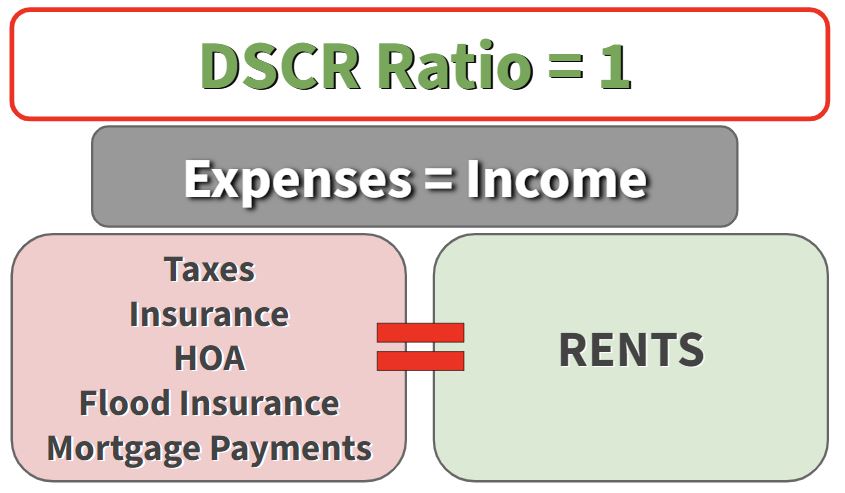
  1. Property Income: The income from the rental property should at least cover the mortgage, property taxes, insurance, and any HOA or flood insurance fees.
  2. Credit Score: Your personal credit score is important. The higher your score, the better the terms and rates.
  3. Loan-to-Value Ratio (LTV): This is the amount of the loan compared to the property’s value. Lower LTV means less risk for lenders and better terms for you.

Who Can Benefit from a DSCR Loan?

DSCR loans are perfect for:

  • New Investors: If you’ve just started your real estate investment journey, you can qualify even without a long business history.
  • Tax Savvy Investors: If you write off a lot of expenses on your taxes, which can reduce your reported income, this loan can still work for you.
  • Expanding Portfolios: Investors looking to add more rental properties can benefit from the flexible qualification criteria.

Example

Imagine you are an investor who just started a year ago. You found a great rental property, but traditional lenders won’t approve your loan because you don’t have two years of business income. A DSCR loan can help. As long as the rental income covers the mortgage and other expenses, you can get the loan and grow your investment portfolio.

Important Considerations

Before jumping into a DSCR loan, consider these factors:

  1. Prepayment Penalties: These loans often come with penalties if you pay them off early. Make sure to understand these terms before committing.
  2. Higher Interest Rates: DSCR loans can have slightly higher interest rates compared to traditional loans. This is because they are easier to qualify for.
  3. Not for Flips or Personal Use: These loans are strictly for rental properties, not for homes you plan to flip or live in.

Is a DSCR Loan Right for You?

If you’re a real estate investor looking for a flexible loan option that doesn’t rely heavily on your personal income, a DSCR loan could be the perfect fit. It’s especially useful if you’re new to the business or if you maximize your tax deductions. Always run the numbers and shop around for the best terms.

Get Started with a DSCR Loan Today

A DSCR loan is an excellent loan for real estate investors. Is it right for your investment needs? Contact us at The Cash Flow Company. We have the tools and expertise to help you understand your options and find the best loan for your needs.

Watch our most recent video to find out more about: DSCR Loan – Is It Right For Your Real Estate Investment?

by

The struggle of business credit vs. personal credit cards is the #1 thing slowing real estate investors down.

Especially in the beginning, it’s tempting to use personal credit cards to kickstart your investing adventures.

However, the use of personal credit cards on investment projects can ultimately cause significant harm to your dreams of building wealth.

The Risk of Personal Credit Cards

Using personal credit cards for the type of large-scale spending necessary in real estate investing drives up usage. 

Your credit score is calculated based on two factors: funds available and usage. High usage tanks your credit score fastA low score can significantly damage terms of loans and your overall ability to grow your investment business. 

A Better Alternative

In order to protect your credit score, consider switching your investment spending to a business credit card.

This separates your investment usage from that personal credit score. 

Additionally, since these cards don’t penalize high usage, you can run up the balance as long as you pay it off on time. In fact, consistently high usage and good payment history can even result in the bank raising your spending limits on that business card.

Getting a business credit card is easy, and with this simple change, your personal credit score is protected. If you have a good score, lenders can confidently offer better rates and terms which will save you a lot of money in the long run.

What to Look for in a Business Credit Card 

Here’s the good news: shopping for a business credit card isn’t all that different from looking for a personal one!

  • Look for 0% interest and benefits the same as you would on a personal card.
  • Make sure you know whether or not that card will report. To protect your credit score, you’ll want to find one that doesn’t.
  • Remember: You still need to pay your bills on time. Many business cards will start reporting if you have late or missed payments.


Read the full article here.

Watch the full video here:

by

If you’re new to investing in rental properties, understanding how DSCR loans work is essential.

In the investment world, rental properties are a great source of wealth. The financial potential in fixing up places to then rent out is a very lucrative model, especially in the current housing economy.

What is a DSCR Loan?

DSCR loans are specifically designed for real estate investors who hold rental properties. 

The acronym literally stands for Debt-Service Coverage Ratio which is a fancy way of saying that the loan cares about the cash flow of a property.

The great news, especially for new investors, is that accessing these loans is less dependent on personal or business income. Even if you’ve just begun a new business, qualification for DSCR depends almost entirely on the potential value and expenses of the rental property itself. 

What is a DSCR Ratio?

The DSCR ratio is a simple calculation that compares income to expenses—the cash flowing in vs. the cash flowing out—on a single property.

Essentially, a DSCR ratio of 1 simply means that the income and expenses equal each other.

The DSCR ratio measures the break-even point of your investment. So long as you bring in the same amount of money as you invest, you won’t lose anything.

However, a DSCR ratio of higher-than-1 is even better. A higher ratio means that you’re bringing in more money than you’re spending—generating cash flow and building wealth.

Use Our DSCR Loan Calculator

To help you find your projected rents, expenses, and ratio, you can use our DSCR loan calculator. It’s a free, user-friendly download that will help you estimate your DSCR ratio to see if your investment property is going to break even.

Once you have an estimate for your ratio, it’s time to start looking for loans. 

Finding a DSCR Loan

Banks typically like to see ratios of 1 or higher. 

However, if you’re investing in rental properties that might not break even, you can often still find a loan, but you might be stuck with higher rates.

You can also check out our website and inquire about the DSCR options we offer


Read the full article here.

Watch the full video here:

by
3 Ways to Quickly Increase Your Credit Score

3 Ways to Quickly Increase Your Credit Score and Get Better Financing.

I don’t know of any other business that is more dependent on financing than real estate investing.

We create wealth by using leverage (aka, by borrowing most of the funds needed to purchase properties).

In today’s financial world, credit scores matter more than ever. The higher the credit score the better the lending options.

3 Ways to Quickly Increase Your Credit Score

Usage makes up 30% of your credit score. With investors tapping into their personal credit cards to keep their business growing, usage creates funding issues.

Here are 3 ways to lower your usage and increase your credit score in weeks, not months:

  1. Obtain a private non-reporting usage loan to pay off all or part of your credit card balances.
  2. Have friends, family members, or a service add you as an authorized user to one or several open credit card accounts. Make sure these accounts are in good standing, have low to no balances, and are at least a year old.
  3. Call your credit card companies and ask them to increase your available credit limit.

Any of these three options will help increase your score in 30 days or less (as long as you maintain all your other credit and keep your current balances and payment history in good standing).

Learn more with these videos from our Youtube Channel.

Next up: Once your score is up…How to fix your usage problem for the long run with business credit cards.

by

The struggle of personal vs. business credit cards is the #1 thing slowing real estate investors down.

Especially in the beginning, it’s tempting to use personal credit cards to kickstart your investing adventures.

However, the use of personal credit cards on investment projects can ultimately cause significant harm to your dreams of building wealth.

The Risk of Personal Credit Cards

Using personal credit cards for the type of large-scale spending necessary in real estate investing drives up usage. 

Your credit score is calculated based on two factors: funds available and usage. High usage tanks your credit score fastA low score can significantly damage terms of loans and your overall ability to grow your investment business. 

A Better Alternative: Business Credit Cards

In order to protect your credit score, consider switching your investment spending to a business credit card.

This separates your investment usage from that personal credit score. 

Additionally, since these cards don’t penalize high usage, you can run up the balance as long as you pay it off on time. In fact, consistently high usage and good payment history can even result in the bank raising your spending limits on that business card.

Getting a business credit card is easy, and with this simple change, your personal credit score is protected. If you have a good score, lenders can confidently offer better rates and terms which will save you a lot of money in the long run.

Requirements for Business Credit Cards

Business credit cards are one of the best ways to make real estate investing easier and more profitable. But what do you need before you start looking for a business credit card?

1. A Business

Typically, you need to have an operating business for at least a year (though there are exceptions)  before applying for a business card. 

This isn’t quite as tricky as it may sound. You need a business account, website, billing information, etc. Essentially, you need proof that you are, in fact, operating an investment business. 

2. A Good Personal Credit Score

Even though you’re applying for a card that won’t report on your personal credit score, approval for the business card is based on your personal credit score.

If you need to raise your personal credit score before applying for a business card, we can help you with that! Usage loans essentially transfer some of that credit card spending into a separate loan that won’t tank your credit score.

Both we and our sister company Hard Money Mike offer usage loans.

3. 1–2 Personal Credit Cards

Obviously, you will need to use your personal credit cards for your investment needs in the beginning. However, if you’ve been using those well, then banks are more likely to approve a business credit card.

All in all, if you have a business, a good credit score, and a couple of credit cards already, it’s fairly easy to start the process of switching to business cards. 

What to Look for in a Business Credit Card 

Here’s the good news: shopping for a business credit card isn’t all that different from looking for a personal one!

  • Look for 0% interest and benefits the same as you would on a personal card.
  • Make sure you know whether or not that card will report. To protect your credit score, you’ll want to find one that doesn’t.
  • Remember: You still need to pay your bills on time. Many business cards will start reporting if you have late or missed payments.

Tools to Help You Find the Right Card

We want to make it easy for you to succeed as a real estate investor—no strings attached. The more you know and the more resources you have, the better equipped you are to find the right deals for you.

We’ve already done some of the work for you:

1. Business Credit Card Marketplace

Here at the Cashflow Company, we’ve partnered with Nav to help you find the right business card for you. By inputting a few pieces of information, we’ll let you know what cards match your needs (and won’t report on your personal credit score).

2. Credit Score Checklist

You can use our free credit checklist download to check the health of your credit score. What can you do to improve that score? Does it need some CPR? What are your options?

3. Other Real Estate Investing Tools

Explore our other tools to optimize your investment strategy. We have various calculators, questionnaires, optimizers, and analyzers to walk you through the various steps of the game.

Contact Us!

Credit scores are a very important piece of leverage. We want you to feel equipped and confident that you’re protecting that credit score in a smart way.

If you want to discuss your credit score, a usage loan, or business credit cards, contact us at Info@TheCashFlowCompany.com. We’re always happy to help!

by

Interest rates are currently high, but they’re likely to start falling in 2024. What can you do now so that you’re prepared to build wealth when interest rates drop?

It’s important to look at the patterns of those interest rates so we can project where they’ll be over the next few years.

Real estate investing is one of the most accessible ways to create generational wealth. It takes two things to be successful:

  1. Leverage: knowing how to use other people’s money (bank loans, etc.) to turn a profit
  2. Math: know how the numbers work so you can use them to your advantage.

Even though interest rates are currently high, if we understand how to use leverage and math to our benefit, we’ll be creating wealth in no time.

Falling Interest Rates Generate Generational Wealth… If You’re Prepared.

If you buy when interest rates are high, you’re going to increase your income as rates fall by refinancing. This puts money back in your pocket. You’re also going to increase your net worth even if you don’t sell.

Refinancing when rates fall is a great way to create the income you need to begin a sustainable investment cycle. 

Also, this strategy also naturally lets you diversify lines of credit, cross liens, etc. that allow you to increase your portfolio.

Time to Buy

Here’s the bottom line: rates are going to fall, and if you buy now, you’ll build income without needing to invest in additional investments. 

This is the time to be buying investment properties.

We’re moving into a market where there’s going to be a lot of demand for properties. As rates fall, more people will be looking to buy. Get ahead of that rush, and use the dropping rates to put money in your pocket.

Resources

It’s important to keep your finger on the pulse as a real estate investor — especially if you’re serious about generating wealth. We have a weekly Investor Mortgage Report that keeps you updated on DSCRs, bank rates, private money, and market trends so you can be an informed investor.

Things change rapidly. Rates may rise through the end of 2023, but the moment they start to fall, you want to be prepared.

If you’d like to be put on the Investor Report email list, or if you have questions about how to get started as an investor, reach out to us at Mike@TheCashFlowCompany.com.


Read the full article here.

Watch the full video here:

by