How can your credit score impact DSCR loans in the real estate investing world?

Credit score impacts investors potentially more than anything else. Lenders will adjust the rates and terms of loans based purely on the three digits of credit score on a person’s financial records. 

Leverage is the key to successful real estate investing, and understanding the impact of credit score is a critical facet of that leverage. 

This article uses real-life examples to illustrate the difference a good credit score makes in the investment world.

How Can Credit Score Impact DSCR Loans?

Let’s look at how DSCR loans can be impacted by a low credit score using two example clients:

  • One (Person 1) has a low credit score of 660
  • The other (Person 2) has a high score of 740

We see a lot of clients looking at cash out refinancing, so we’ll look at that type of project.

What’s the Difference?

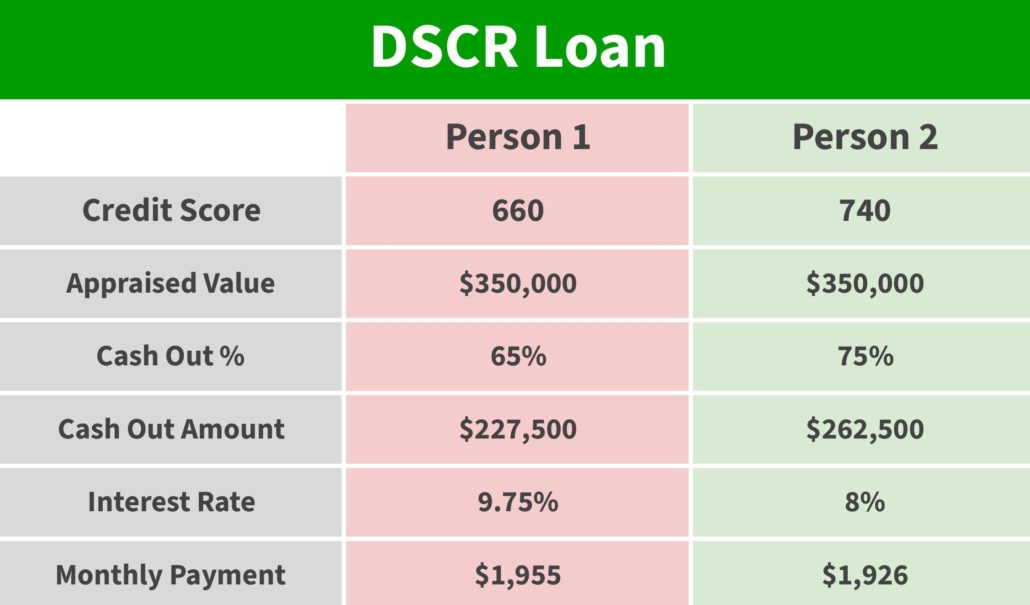
If Person 1 has a 660 credit score, not only will they likely struggle to find lenders, but 65% is about the best they could look for. This directly translates into less money out of that property.

In contrast, Person 2 with a 740 score should be able to fairly easily get 75%. The more money out, the better your leverage.

As you can see in the chart above, not only does the person with a lower credit score get less cash out, but their rate is also higher which raises their monthly payments. 

Credit Score Matters

Although at first glance, it’s tempting to just look at the monthly payments and think, “It’s not that big of a difference,” don’t fall into that trap!

The person with the higher score not only has a lower monthly payment, but because they also got a higher Cash Out % which gave them an additional $35,000 out. 

Having that good credit score makes it possible to keep cash flowing. If you’re serious about investing, your credit score matters.

Read the full article here.

Watch the full video here:

by

How can you use the BRRRR method to get you in and out of a property with little-to-no money down?

Let’s start with a real scenario we encountered a few weeks ago. A client from Michigan called. He’s done flips before and even kept a few rentals, but he’s new to the BRRRR method. 

In the past, he’s always used partners or cash to fund his investing. However, this property needs more money.

He’s buying it for $200,000, putting approximately $22,000 of rehab into it, and we’ll estimate closing costs around $7,000. That’s a total of $229,000 for a pretty basic investment property. 

Where can this client find the money, and how can he leverage it to his advantage?

What is the BRRRR Method?

BiggerPockets launched the BRRRR acronym a few years ago. BRRRR stands for Buy, Rehab, Rent, Refinance, Repeat. This acronym outlines a helpful strategy for successful real estate investing. 

It centers around buying properties with built-in equity. After renovations, the investor can refinance therefore creating a sustainable cycle of investments. 

Can You Use a DSCR Loan to Begin the BRRRR Method?

The short answer is technically yes. However, since you don’t currently own the property, you can’t claim the equity in it just yet which makes it a not-so-great deal.

For our example client above, a DSCR loan will only cover up to 80% of the purchasing costs. This leaves 20% leftover — a large amount of cash that our client and a lot of newer investors simply don’t have.

Additionally, a DSCR loan won’t cover renovations or closing costs.

If you’re trying to exclusively use a DSCR for a BRRRR, you’re going to see the payments begin to add up really quickly.

A Better Plan

Instead of throwing a DSCR at the whole thing from the start, we suggest a different strategy of kickstarting your BRRRR cycle. 

1. Start with a bridge loan.

The BRRRR method is all about sustainable investing. How can you use other people’s money to keep cash flowing in and out of your projects?

This means beginning with a loan that’s going to cover those starting costs so you can get ownership and claim that equity!

A bridge loan is more flexible than a DSCR so you can cover the purchase, rehab, even the closing costs. 

2. Add the DSCR.

Once you’re actually starting to rent out the property, that’s the time for the DSCR. DSCRs have more restrictions anyways, so they’re most effective when used for renting.

The DSCR can pay off the bridge loan and you can refinance the property for an even better outcome. 

The Beauty of the BRRRR Method

By using this loan strategy with the BRRRR method, our client was able to come up with a plan that should easily generate over $1,000/month of positive cash flow for himself. 

And it all started with strategically using other people’s money to enter the BRRRR cycle. 

This is the beauty of real estate investing. It’s accessible and profitable, even for beginners. 

We’re Here For You

If you have any questions or want to discuss a project, reach out to us at Info@TheCashFlowCompany.com.

Please also check out the free tools on our website for downloads that can help set you up for success. Additionally, if you’re interested in the BRRRR method, make sure to explore our BRRRR roadmap

by

How can your credit score impact fix and flip loans in the real estate investing world?

Credit score impacts investors potentially more than anything else. Lenders will adjust the rates and terms of loans based purely on the three digits of credit score on a person’s financial records. 

Leverage is the key to successful real estate investing, and understanding the impact of credit score is a critical facet of that leverage. 

This article uses real-life examples to illustrate the difference a good credit score makes in the investment world.

How Does Credit Score Impact Fix and Flip Loans?

Let’s compare two clients: 

  • One (Person 1) has a low credit score of 660
  • The other (Person 2) has a high score of 740

These numbers are based on real clients who have approached us for loans.

What Changes?

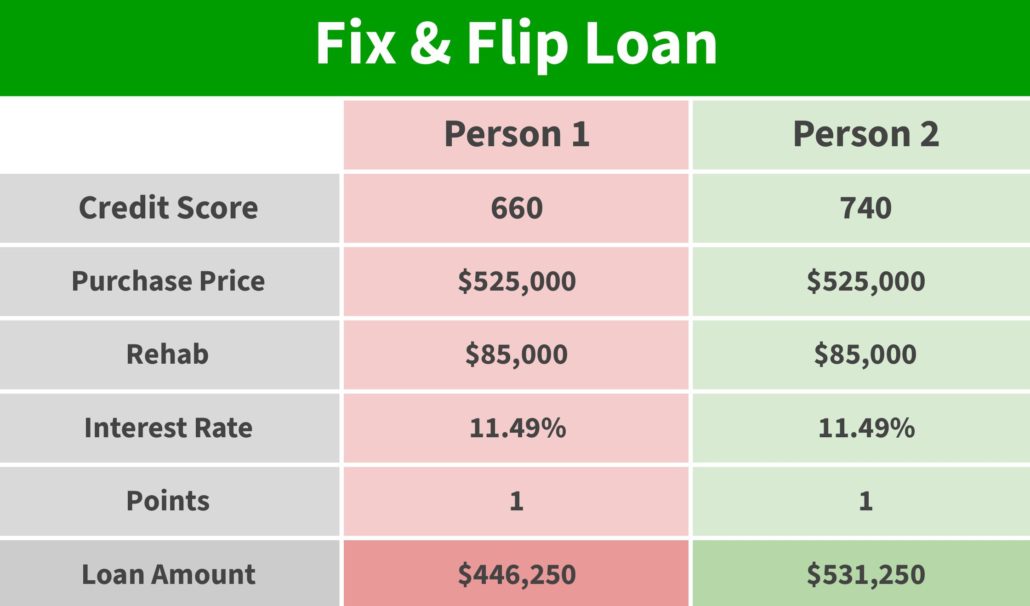
If you look at the way the numbers worked out in the chart above, you’ll notice that the actual interest rate is the same for both clients.

Obviously credit score can impact a rate, however it’s also common for the impact to be even simpler. In this situation, the lender simply gives less money to clients with lower scores.

In this scenario, the lender only offered 85% of the purchase price to the person with the lower credit score. The person with the higher score ended up having 85% of the purchase price covered as well as 100% of the rehab costs. 

The Cost of a Low Score

If we estimate the closing costs for Person 1’s project at around $7,500 and combine that with the leftover 15% of the purchase price and 85K rehab, the cost of a low credit score starts to take shape. In our example, Person 1 will need to find over $171,000 of additional funding simply because they had a lower score.

Even when the rates aren’t affected, a low credit score is going to cost more in the long run. It’s hard to do multiple projects when you have to bring in that much money on your own. 

Read the full article here.

Watch the full video here:

by

Lenders want to see your own money going towards your projects through personal investments. 

In real estate investing, leverage comes from using other people’s money to generate wealth and income. 

The better your leverage, the easier and more profitable real estate investing becomes. 

But how do you find the right loans that can give you that leverage?

One of the things lenders look for is whether or not you’re personally invested in what you’re asking them to put money into.

Use Personal Investments to Demonstrate Commitment

If you’re also investing your own money in your project, lenders know you’re serious about the job. 

Using other people’s money (OPM) also demonstrates that your friends and family are willing to invest in your project. Lenders like to see you have skin in the game, even if it’s as simple as borrowing from a line of credit.

Especially if you’re a newer investor, the less you ask of lenders and the more at risk you take on, the more lenders will be attracted to you.

Personal investments demonstrate your commitment to follow through and finish a project — just what lenders are looking for!

Learn More

Read the full article here.

Watch the YouTube video here:

by

How can your credit score impact different types of loans in the real estate investing world?

Credit score impacts investors potentially more than anything else. Lenders will adjust the rates and terms of loans based purely on the three digits of credit score on a person’s financial records. 

Leverage is the key to successful real estate investing, and understanding the impact of credit score is a critical facet of that leverage. 

This article uses real-life examples to illustrate the difference a good credit score makes in the investment world.

How Does Credit Score Impact Fix and Flip Loans?

Let’s compare two clients: 

  • One (Person 1) has a low credit score of 660
  • The other (Person 2) has a high score of 740

These numbers are based on real clients who have approached us for loans.

What Changes?

If you look at the way the numbers worked out in the chart above, you’ll notice that the actual interest rate is the same for both clients.

Obviously credit score can impact a rate, however it’s also common for the impact to be even simpler. In this situation, the lender simply gives less money to clients with lower scores.

In this scenario, the lender only offered 85% of the purchase price to the person with the lower credit score. The person with the higher score ended up having 85% of the purchase price covered as well as 100% of the rehab costs. 

The Cost of a Low Score

If we estimate the closing costs for Person 1’s project at around $7,500 and combine that with the leftover 15% of the purchase price and 85K rehab, the cost of a low credit score starts to take shape. In our example, Person 1 will need to find over $171,000 of additional funding simply because they had a lower score.

Even when the rates aren’t affected, a low credit score is going to cost more in the long run. It’s hard to do multiple projects when you have to bring in that much money on your own. 

How Can Credit Score Impact DSCR Loans?

Using a similar example, let’s look at how DSCR loans can be impacted by a low credit score. We’ll use the same clients:

  • One (Person 1) has a low credit score of 660
  • The other (Person 2) has a high score of 740

We see a lot of clients looking at cash out refinancing, so we’ll look at that type of project.

What’s the Difference?

If Person 1 has a 660 credit score, not only will they likely struggle to find lenders, but 65% is about the best they could look for. This directly translates into less money out of that property.

In contrast, Person 2 with a 740 score should be able to fairly easily get 75%. The more money out, the better your leverage.

As you can see in the chart above, not only does the person with a lower credit score get less cash out, but their rate is also higher which raises their monthly payments. 

Credit Score Matters

Although at first glance, it’s tempting to just look at the monthly payments and think, “It’s not that big of a difference,” don’t fall into that trap!

The person with the higher score not only has a lower monthly payment, but because they also got a higher Cash Out % which gave them an additional $35,000 out. 

Having that good credit score makes it possible to keep cash flowing. If you’re serious about investing, your credit score matters.

How to Raise Your Credit Score

If you’re serious about real estate investing, you need to keep your credit score up. A low score is really going to cost you over time by strangling your cash flow. 

But how can you fix a bad credit score?

There are a lot of options that can help you raise your credit, including usage loans, credit card strategies, or various tips

If you’re interested in learning more about how credit scores affect investment opportunities or need help raising your score, reach out to us at Info@TheCashFlowCompany.com.

by

It’s important to look ahead when preparing your loan applications in the real estate game.

In real estate investing, leverage comes from using other people’s money to generate wealth and income. 

The better your leverage, the easier and more profitable real estate investing becomes. 

But how do you find the right loans that can give you that leverage?

Before applying to various lenders, make sure you’re prepared for the basics.

Be Honest

This may seem basic, but it can be really tempting to slip in a few lies when you’re trying to get a deal. Don’t do it.

Lenders do background checks, look at credit, and generally get external confirmation for everything you tell them. Lying not only makes their jobs harder, but your lack of honesty can ruin your reputation with that lender.

Make sure you disclose if you’ve gone through bankruptcy or if you have any credit card debt. 

They will find out if you’re hiding information or stretching the truth, and you’ll get dumped to the bottom of the pile.

Especially About Your Credit Score

One of the first things lenders look at is credit score. That score can determine whether you even get considered for a loan.

It’s better to be honest about a bad credit score and have a detailed plan about how to fix it than to lie. 

If you have a bad credit score, work on fixing it before submitting loan applications.

If credit score is something you’re concerned about, there are ways to raise your score, including looking into usage loans

The better the score, the better terms a lender will offer. The better the terms, the better your leverage. 

If you have questions about raising your score or are interested in discussing a usage loan, you can contact us here, and we’ll be happy to discuss your options.

Learn More

Read the full article here.

Watch the YouTube video here:

by

New investors in the real estate game often struggle with the details of their first loan payments.

Real estate, like many fields, has its own vocabulary and rules. This can make it extra challenging for people who are trying to enter the real estate investing world.

So many people come to us confused, asking for guidance as they’re getting started.

Real estate is all about leverage. Understanding the lingo and how to calculate the most common rates will help you be money-wise and confident in your investment journey.

This is especially true (and important!) when it comes to paying off your loans.

What Should You Know About “Payments”

When do payments start? How much do they cost?

If you’re new to real estate investing, it’s a good idea to ask a lot of questions about payments so you know what to have in your budget before you begin.

A few terms to look out for:

“Arrears”

Product interest always shows up after the fact (in “arrears”). Basically, your July 1st payment is going to pay all of the interest for June.

Interest accumulates over the course of a month. Then the bill shows up after.

This how all mortgages are set up. So when you’re trying to figure out your payments and when they’re due, always look ahead 30-45 days after you close for the first payment.

Payments are typically due on the 1st or 15th of the month. Check with your specific lender to make sure you know your pay period.

“Simple Interest”

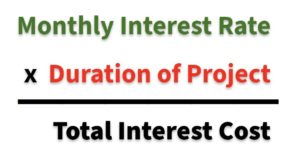
Above, we showed you how to calculate your monthly interest rate based on the simple interest rate of your loan.

When you start paying off your loan, you’ll see a big accumulation of interest. If you’ve taken time to calculate your monthly rate, this shouldn’t be a surprise to you. You can multiply that monthly rate by however long your project took to find your overall interest cost.

You need money to make money in real estate, but you want to know the cost ahead of time as closely as possible.

Take time to figure out these numbers up front so you don’t have any surprises.


Read the full article here.

Watch the full video here:

by

Five real estate investing tips to make sure you get the leverage to finish your projects. 

In real estate investing, leverage comes from using other people’s money to generate wealth and income. 

The better your leverage, the easier and more profitable real estate investing becomes. 

But how do you find the right loans that can give you that leverage?

Here are 5 real estate investing tips from our experts at The Cash Flow Company to help get you where you need to go:

Tip #1: Tell the Truth

This may seem basic, but it can be really tempting to slip in a few lies when you’re trying to get a deal. Don’t do it.

Lenders do background checks, look at credit, and generally get external confirmation for everything you tell them. Lying not only makes their jobs harder, but your lack of honesty can ruin your reputation with that lender.

It’s better to be honest about a bad credit score and have a detailed plan about how to fix it than to lie. 

Make sure you disclose if you’ve gone through bankruptcy or if you have any credit card debt. 

They will find out if you’re hiding information or stretching the truth, and you’ll get dumped to the bottom of the pile.

Tip #2: Know Your Real Estate Lingo

This can be tough for new players. We recently created a list of some of the most common real estate lingo that new investors will encounter. 

Knowing terms like LTV, ARV, DSCR, Prepayments, etc. before you meet with prospective lenders shows that you’ve put in the time to educate yourself. 

Understand the numbers that go into making profits, including realtor fees, interest, and escrows. You should have a basic understanding of everything that goes into a project before seeking a lender. 

Resources like our YouTube channel or Investopedia can also help you learn the ins and outs of real estate jargon.

Tip #3: Raise Your Credit Score

One of the first things lenders look at is credit score. That score is often a determining factor in whether you even get considered for a loan.

If credit score is something you’re concerned about, there are ways to raise your score, including looking into usage loans

The better the score, the better terms you’ll be offered. The better the terms, the better your leverage. 

If you have questions about raising your score or are interested in discussing a usage loan, you can contact us here, and we’ll be happy to discuss your options.

Tip #4: Be Personally Invested

If you’re also investing your own money in your project, lenders know you’re serious about the job. 

Using other people’s money (OPM) also demonstrates that your friends and family are willing to invest in your project. Lenders like to see you have skin in the game, even if it’s as simple as borrowing from a line of credit.

Especially if you’re a newer investor, the less you ask of lenders and the more at risk you take on, the more lenders will be attracted to you.

Tip #5: Shop Around For Good Deals

The 2024 real estate market is setting up to be a profitable one for investors. 

Shop around and be selective so you pick the best deals. It’s better to find two really good deals in a year that you can complete than to overextend and not follow through.

This step can take a lot of time and effort, but it’s worth it. Just as lenders are selective with the investors they back, you should also be selective as you look for properties and lenders. 

How We Can Help

As we said earlier, leverage is key.

Knowing these real estate investing tips can help you make your lenders happy so you can start productive cash flow:

  • Be honest
  • Learn the language
  • Work on your credit score
  • Keep it personal
  • Hunt for the right deals

Real estate investing takes time and hard work, but it’s a great way to create generational wealth. 

We have a ton of free tools to download that will help you prepare for these investment opportunities.

If you have questions about these tips or how to get leverage, we’re happy to help. Just reach out to us at Info@TheCashFlowCompany.com.
by

A lot of people are afraid to make the switch to business credit cards because they’re unfamiliar. These are the three most common concerns we hear from our clients who need to make the switch to business credit cards for real estate.

1. “It’s a huge switch from my current system and is going to take forever.” 

FALSE

People hear terms like “corporate credit” or “business credit card” and think it’s going to be a massive change that they’re going to need to get done at Bradstreet.

That’s not the case at all!

Essentially, you’re going to look for the same credit cards you have now—ones with 0% APR, cash back, travel miles, or whatever you like. Look for a credit card with the perks you enjoy and open it in your business’ name. 

Sure, it’s technically a “business credit card,” but you shop around the exact same way as you would for a personal card. 

2. “Business credit cards still affect my personal credit scores.” 

FALSE*

Here’s the great news: so long as you’re paying it off on time, your business credit card will never report on your personal credit score.

*Unfortunately, if you have a few late payments, it will start reporting. Also, there are a few business credit cards that do report on your personal score. Always read the fine print so that you can avoid these cards and companies.

Therefore, if you pick a good card and are good about paying off your balances, this shouldn’t be a huge concern. So long as you pay on time, it will never report your balances or usage. This protects your personal credit score for real estate investors which is the whole goal of getting a business credit card.

If you need help figuring out which cards are best for your business, contact us!

3. “I need to have an actual business for a business credit card.”

TRUE

Yes, it’s true, but don’t panic if you’re not set up for this yet! 

You do need a business, an LLC, and a business checking account. 

If you already have a business set up, obviously making the change will be super easy. However, if you need any help getting these items in order, let us know, and we’d be happy to help.

A poor credit score is a huge inhibitor for investors. It’s worth doing a little extra work on the front end to set up something that’s going to open doors for you and fix one of your biggest weaknesses.

Read the full article here.

Watch the full video here:

by

What is your lender talking about when they mention points on your loan? What is a point in real estate investing?

Real estate, like many fields, has its own vocabulary. This can make it extra challenging for people who are trying to enter the real estate investing world.

So many people come to us confused. Sometimes they don’t even know what to ask because the language is so unfamiliar.

Real estate is all about leverage. Understanding the lingo and how to calculate the most common rates will help you be money-wise and confident in your investment journey.

What is a “Point”?

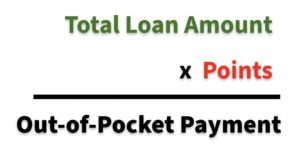
When your lender mentions that something is “one point” or maybe “one and half points,” they’re talking about out-of-pocket cost. So what is a point in real estate investing?

“Points” are a percentage of the loan that the lender is going to charge you.

Hypothetically, let’s say your lender says your loan is a “two point” cost to you. That means they’re going to charge you 2% of the total loan amount.

  • Total Loan Amount: $200,000
  • Points: 2 (meaning 2% or 0.02)
  • Calculation: 200,000 x 0.02 = $4,000
  • Out-of-pocket Cost for the Loan: $4,000

The lower the points, the lower the cost; the higher the points, the higher the cost. Also, remember that the points are calculated off the loan amount, not the purchase price.

Always remember to look out for fees. Points are often only part of the upfront charges from your lender.

Make sure you ask ahead of time about additional fees, appraisals, underwriting, escrows, and escrow draws. 


Read the full article here.

Watch the full video here:

by